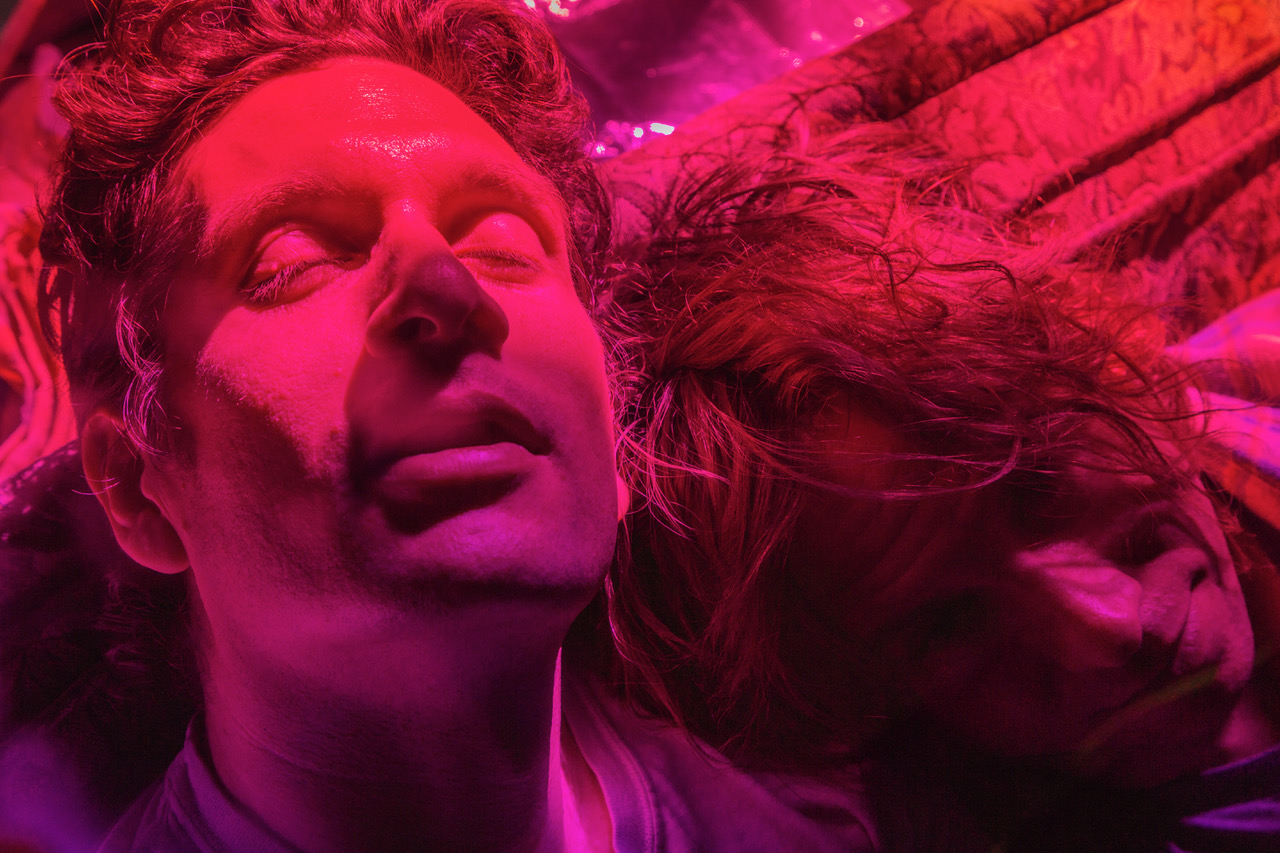
There comes an age when you start to value things that once seemed suspect. Sleeping well, for instance. Comfortable shoes. An amp that doesn't take two people to get it out of the car. Randy Randall, guitarist of No Age, has reached that point in his life and seems rather pleased about it.
“I have entered my ‘Chopped Unc’ phase of life. Comfortable shoes and small amps,” he tells us. Unc is slang for uncle: someone who has reached a certain age and no longer feels obliged to behave as if he were twenty-five.
A few years ago Randy said: “We want to get old and weird.” We asked what the band can do now that it might not have allowed itself when it started.
“I think we just played an ambient set with puppets at a cool Marionette theater: Bob Baker. I don't know if we would have done that when we started, maybe we would have.”
It's hard to say what would have been too strange for No Age in 2007.
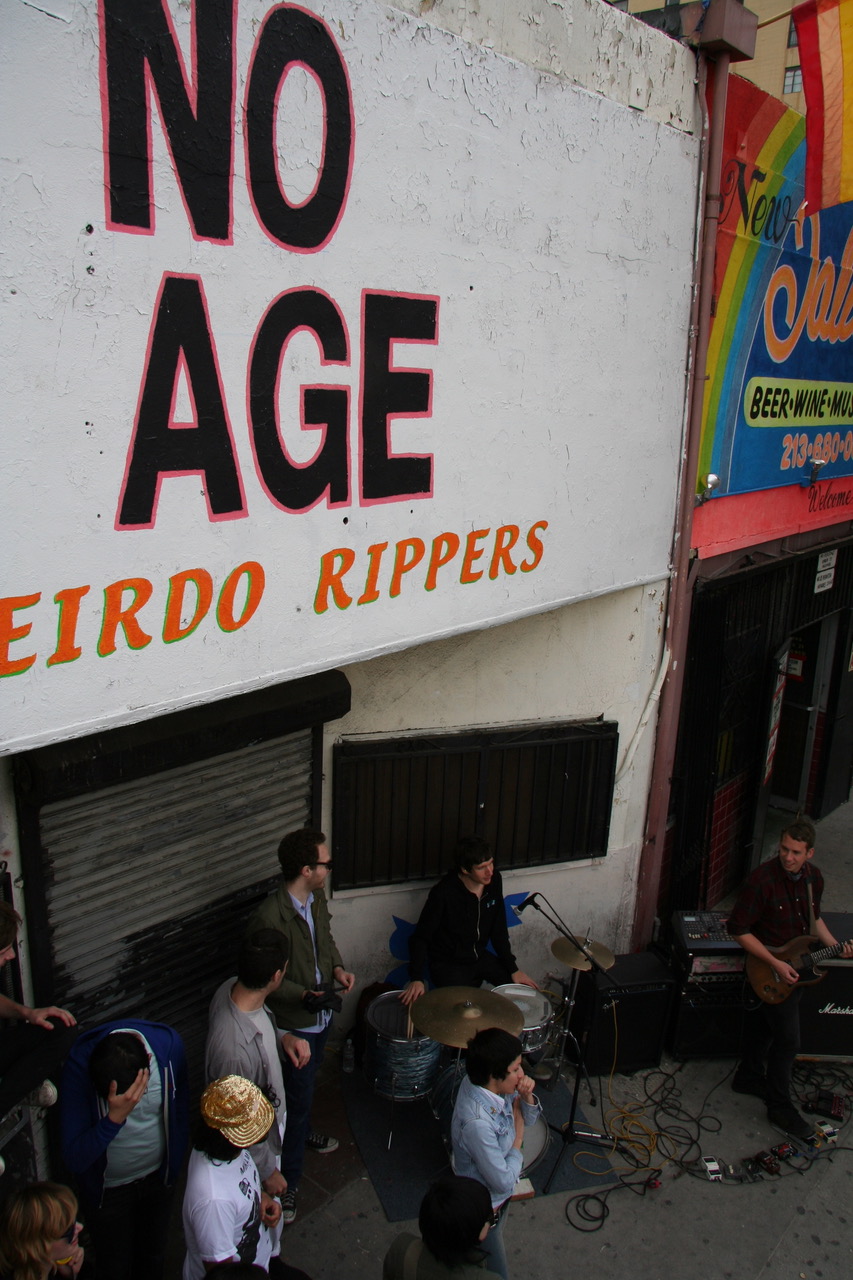
The duo Randy forms with Dean Spunt came out of Los Angeles in the mid-2000s, around The Smell, a small venue where punk, noise, warped pop songs and artists who didn't seem overly interested in the borders between those things could live side by side. It was also an all-ages space, something rarer than it should be in a city where much of the live music was tied to bars and venues with access restrictions.
Weirdo Rippers (2007) collected their early recordings; Nouns (2008) introduced them to a much larger audience; and Everything in Between (2010) confirmed that this mix of noise, melody and fragility could carry on without losing its character.
Almost twenty years have gone by. Randy has a family, a considerable career and a few stories to tell. Some are funny. Others, less so. There are records that came out in unlikely ways, projects nobody wanted to release and a film still waiting for someone to open its files.
And there's a fight with Dean we've wanted him to explain for far too long.
Two people, at last
Before No Age there was Wives. Randy and Dean played together in that band for several years, though that didn't mean they wrote together.
“Band dynamics are funny like that sometimes. In Wives, I would write a song with the drummer and then Dean would think of something to play on it or not. Then Dean would write a song with the drummer and I would have to think of a part to add to the song they already wrote. So, in that band Dean and I never really collaborated on writing a song together.”
When they started jamming on what would become No Age, they found a different way of understanding each other.
“We found out that we liked writing songs together and we each had ideas that would complement the other person's ideas.”
Randy remembers one of the first.
“I think one of the first songs we wrote was called ‘Dead Plane’. We played that song live at all our shows for the first few years. It is just 2 chords with some reverse delay from a Boss DD-5 Digital Delay pedal.”
Two chords and a pedal. Not much more was needed.
On No Age's first records, songs could surface in the middle of a cloud of noise, show a melody for a couple of minutes and vanish before you had finished recognising it. There was something disarming about that mix of brutality and simplicity. The guitars sounded capable of knocking down a wall, but underneath there were songs with, at times, the innocence of a home recording.
The band soon found a language of its own. The hard part would be keeping it alive without turning into a copy of itself.
And learning to get along.
The fight with Dean
During a tour with Mika Miko, Randy and Dean had a fight on stage. We wanted to know what had happened.
“Oh man, the fight was about nothing. Well I guess not nothing.”
Randy gets to the point quickly.
“I was drunk and messing up the songs on stage and Dean was mad at me for being too drunk to play the songs correctly. So he started spitting at me on stage. Once I figured out he was spitting on me then I turned around and jumped over the drums and tried to punch him. Jennifer from Mika Miko broke it up.”
The scene has all the ingredients of a road anecdote someone might tell twenty years later, laughing. The problem is that Randy doesn't remember it with any pride.
“It was my fault for drinking all day at the pub and fucking up the songs. At that time I was a horrible alcoholic and I had no sense of self control. If we were at a bar with free alcohol I would drink until I passed out.”
He doesn't try to spread the blame.
“So I take all the blame for that fight.”
And he adds something that changes how you hear the whole story.
“I am now currently celebrating 16 years of sobriety and I am very happy that I no longer need drugs or alcohol to get through life. I made many many mistakes when I was drunk. I have done my best to apologize and make amends for all of them.”
No Age carried on after that fight. Dean and Randy kept playing together, releasing records and finding ways to make life musically complicated for themselves.
The MySpace teacher
In 2008, while No Age were starting to appear in music magazines around the world, Randy was working as a substitute special education teacher.
One of his students recognised him in a publication and posted on MySpace: “Hey mister, is this you?”
For the music press, No Age were one of the most interesting acts in Los Angeles' new experimental punk. For that kid, the guitarist in the magazine was his teacher.
We asked what happened to that job once the band started touring more often.
“I was on a long term substitute teacher assignment. So at the end of that school year, I just did not sign up for the next year. I didn't leave any students waiting for me.”
He didn't walk out on a class mid-year or run off after a musical opportunity.
“It was a great job and I might go back to substitute teaching in the future.”
The design department was in a cheap hotel
During the 2008 tour with Liars, No Age shared the road with Brian Roettinger, a graphic designer and collaborator of the band who was then selling merchandise for Liars.
One night they stayed at a hotel in Lawrence, Kansas. They needed to try out an idea for the cover of the “Eraser” single, but they had no paper. They took a painting off the wall and wrote on the wall behind it.
The photograph ended up as part of the design.
We wanted to know what exactly they had written.
“That is a good question. I think we just wrote ‘No Age’ ‘Eraser.’ Or something like that. It was like a text design for what the cover could look like.”
Randy doesn't remember the exact words, but he remembers all the work that surrounded that idea.
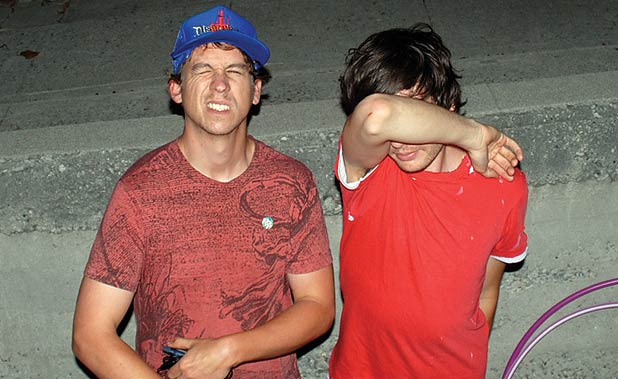
“We designed the whole ‘Nouns’ album art on that tour overnight at cheap hotels across the US. Our friend Brian Roettinger was selling merch for Liars, and after the show we would work with Brian on his laptop to lay out pictures and design ideas for the Nouns album.”
Roettinger has also said that he worked on the packaging for that record during the tour, every night, after the shows.
The result was one of the most recognisable covers of that era of indie rock. But its origins lay in a string of hotel rooms, laptops and late-night conversations.
Randy remembers something else they did on that tour.
“We even recorded the b-sides to the Eraser single in a snowy parking lot on that tour. I think they were cover songs. We recorded the drums outside in the snow and then I would overdub the guitar directly into the laptop. Then Dean would do the vocals direct after that.”
You can picture a band working in a professional studio, with perfectly miked instruments and a choice of amps at their disposal. No Age were recording drums outdoors, in the middle of a snow-covered parking lot.
“They turned out cool, maybe? It was an early attempt at self-recording into a computer for us. I think we got better recording ourselves later.”
That “maybe?” can stay right where it is.
Six hours nobody can watch
Among the projects Randy has left unfinished there is one that might be especially interesting for those of us who follow the history of independent music scenes.
Around 2009 he was shooting a documentary about all-ages venues. He had interviewed musicians and gathered images of a culture that rarely appears in the official histories of the music industry.
The project was never finished.
“Oh man! You are hitting all the sore spots.”
“I have multiple hard drives with over 6 hours of awesome footage that is in some type of codec from 2009. I can't figure out how to play it. I have tried a few times to have friends help me encode it to watch the footage.”
“I don't have the budget to take it to a professional editor at this time. I would love to finish that project. It breaks my heart thinking about it.”
The documentary was shelved when Randy decided to get sober and then went on tour with No Age to support Everything in Between.
“I figured all that footage would become a time capsule.”
We don't know what is on those six hours. Randy hasn't been able to review the material as he would like. But the project focused on spaces that let young musicians organise gigs and build their own communities outside much of the commercial circuit.
“So hopefully I will find funding to hire an editor to help encode the footage and edit everything together into something like a full length documentary or a few episodes for YouTube or something. I would love for everyone to be able to see the footage.”
Seventeen years have passed since 2009. Some of the people in those recordings will have kept on making music. Others will have changed their lives. The venues may have disappeared, changed what they do, or survived against all odds.
“I figured all that footage would become a time capsule.”
Randy holds on to a part of that story, even if he can't yet show it to us.
Converse, Barcelona and a protest that has aged
In 2012, No Age played a Converse-sponsored show in Barcelona. Converse is the footwear brand owned by Nike.
The band had prepared a video that included images of American consumerism and of working conditions in Asian factories. The episode ended up causing a conflict with the organisers.
We asked Randy about what happened that night. His first reaction was to correct the way we had reconstructed the episode.
“That's not exactly how it happened.”
He goes on to explain how they had conceived the intervention.
“We made a video of footage to be projected behind us throughout our entire set. In the middle of the footage we edited in footage of people in America going crazy during ‘Black Friday’ sales events. Like footage of people pushing and shoving trying to buy a microwave or toys. Then we edited in footage of sweatshops in Asia.”
The intention, he explains, was simple.
“We thought this was an artistic expression of American capitalism.”
The promoter wasn't best pleased. Converse was sponsoring the show, and the video questioned some of the commercial mechanisms that had made the event possible.
Randy and Dean had talked beforehand about using their performances to open conversations about the relationship between art and the companies that fund it.
“There used to be a lot of operations that would give money to promoters to promote their products using live music and an excuse to get young people together and place banners all over the venue or give away free product like shoes to try and influence young people to buy their product.”
Randy now looks back on that intervention with a mix of distance and self-criticism.
“In light of the terrible things going on in America and around the world, this all seems childish and bratty, but at the time it felt artistic and punk.”
And he points to a change.
“I don't know if it happens as much these days. I think social media has taken that place of sponsored content.”
An Object
For An Object, released in 2013, Dean was experimenting with a form of percussion different from the conventional drum kit.
Randy at one point raised the idea of bringing in another drummer. We asked whether he was serious.
“I would have loved to play with a drummer when we were making that record.”
Dean was using contact mics, a speaker and loose change.
“In hindsight that record came out cool and I'm glad we made it the way we did. At the time when we were preparing for the tour to support that record it was difficult to figure out how to play those songs live. A third member on stage playing drums would have added more energy to the live shows.”
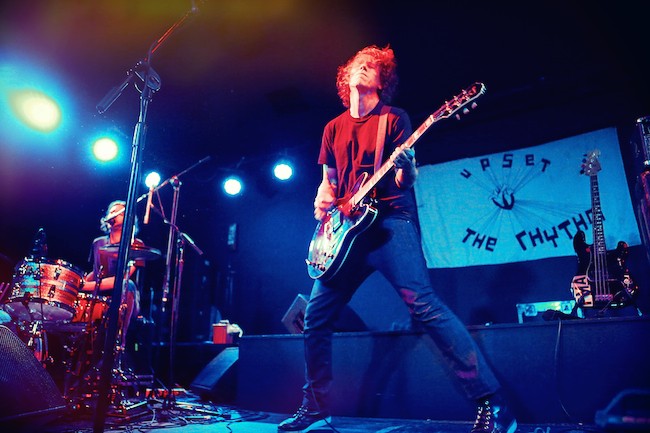
“We thought we were like Dylan going electric, but it was like Dean going contact mic.”
Bob Dylan at Newport, 1965. Dean Spunt with a contact mic, almost half a century later.
Rat Fist: nobody wanted the record
In 2014, Randy formed Rat Fist with Sean McGuinness, drummer of Pissed Jeans.
They wrote songs, recorded material and announced an album. The album never appeared.
In January 2016, six songs were put up on Bandcamp, with no label behind them and not much explanation.
We asked what had happened.
“You are hitting me with all my failures!”
“It's all good. I loved writing those songs and playing with Sean. Unfortunately, all the [labels] we showed the songs to turned us down. No one wanted to put out those songs.”
Then Sean left the band a week before a tour that was due to take them to SXSW.
They looked for another drummer to honour the dates. The line-up kept changing until it settled on Noel Paris, whom Randy remembers as Rat Fist's last drummer.
There was also Speargun, a friend of Sean's, who had joined as bassist on an East Coast tour and stayed on after Sean left.
“It was a lot of fun writing and performing as Rat Fist.”
“You are hitting me with all my failures!”
The rejections, however, went on.
“Again, everything we recorded, we pitched to labels and everyone turned us down so we released the songs we liked on Bandcamp and called it a day.”
By then, Randy had spent years putting out records with Sub Pop, had toured internationally, and his name was linked with one of the best-known bands in American independent rock.
None of that was enough to convince anyone to release Rat Fist.
Randy ends the story with an offer you would hardly find in a record label's press release.
The first songs he wrote with Sean were self-released on a seven-inch single. He still has copies at home.
“If anyone wants one just email me. randy@randyrandall.com send me $5 plus shipping.”
Old, weird and a lot less worried
Back to the present.
Randy has been with No Age for almost twenty years. They have made records, changed how they work, had their arguments and watched much of the musical world they first knew transform.
When we asked what they can allow themselves now that they might not have in 2007, he talks first about the show with the puppets. Then he stops on something more personal.
“I think in general, we are just less concerned with how other people perceive us. I think that is a natural occurrence. As most people age their vanity is diminished.”
He recalls that, when they were in their twenties, a considerable part of their energy went into judging what impression they made.
“I think there was a much larger part of our brains that were always calculating if we were cool or not. It used to feel important to know cool people and do cool things.”
It's curious to hear that from someone who was part of a scene as celebrated as The Smell's. From outside, those bands seemed to have built a small world with its own rules, far from the conventions of the music industry. But there were codes too, and a more or less shared idea of what counted as interesting.
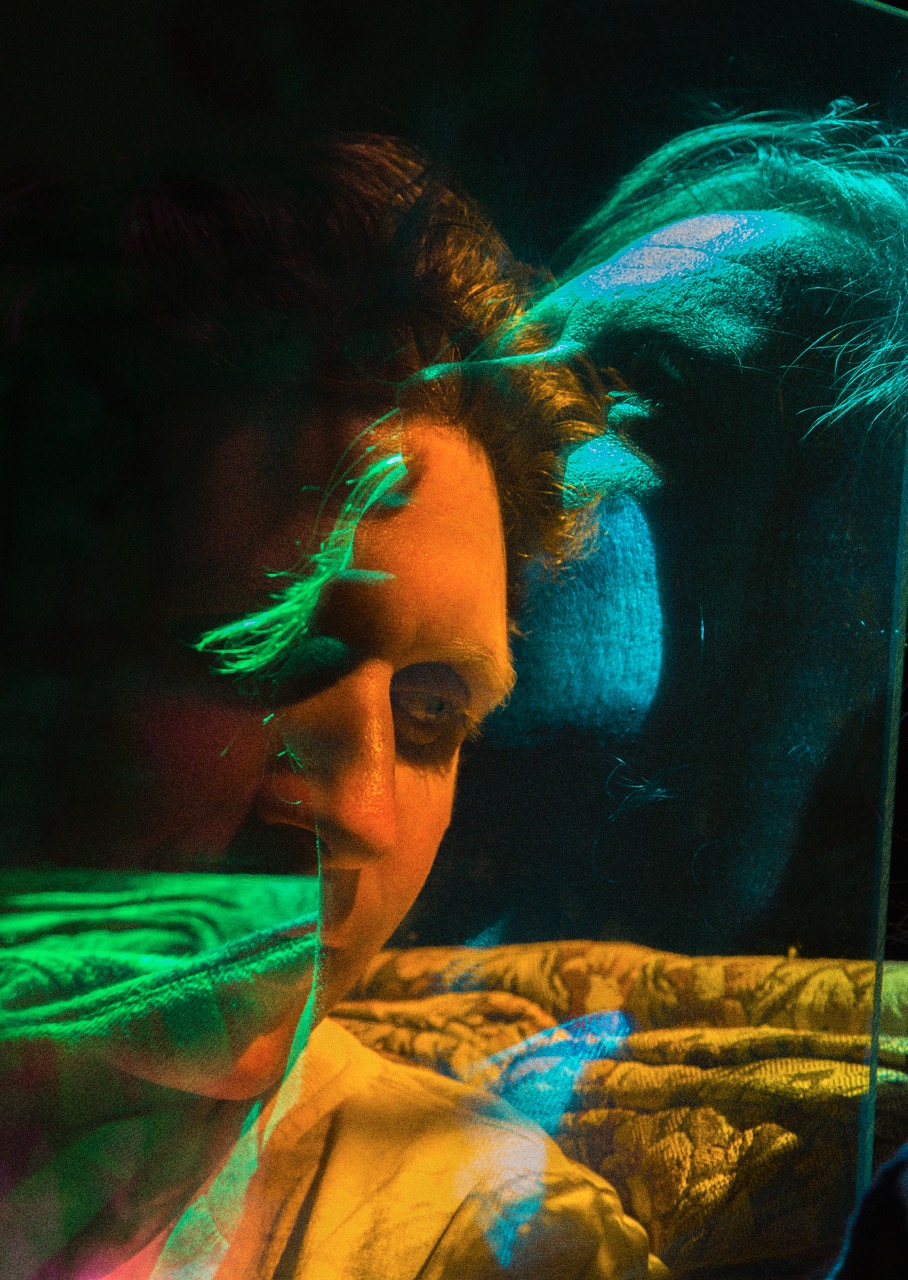
Randy recalls that worry from a distance that seems to have suited him.
“At this point in my life I don't care at all about being cool. I like being a dad and having fun with my family. That takes up all my energy.”
He hasn't lost interest in playing.
“I still like playing guitar and making music, but I have no ambition to be cool.”
Maybe that explains why he can play an ambient set with puppets without wondering too much what the audience that discovered the band through Nouns will think. Or why he can contemplate going back to teaching one day.
“So maybe that makes me weird, I don't know. I know it definitely makes me old.”
“I think there was a much larger part of our brains that were always calculating if we were cool or not.”
Three records before we go
We finish with our usual question: we imagine ourselves at Randy's place and, before leaving, ask him to name three records he thinks we should be listening to right now.
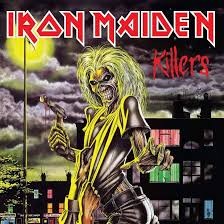
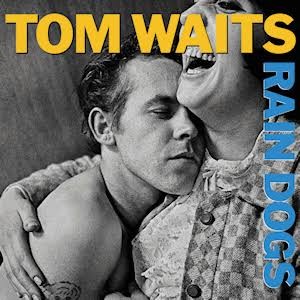
He picks Killers (1981) by Iron Maiden, Rain Dogs (1985) by Tom Waits, and Inflammable Material (1979) by Stiff Little Fingers.
Heavy metal, songs that sound as though they came out of some New York back alley, and Northern Irish punk. Three records that don't have to agree on much. Randy doesn't explain why he chose them, either. After almost twenty years of No Age, we're hardly going to ask him to justify his taste.