Nobody conceived it to make techno or electro. A wooden box from 1978 ended up on songs we have been listening to for half our lives.
I am a lover of drum machines. Since I started out in music production, quite a few have passed through my hands. Some Roland classics, like the TR-505, TR-707 and TR-626; an MFB-522 Drum Computer; some more recent ones, like the Roland TR-8, TR-8S and TR-6S, the Korg Volca Drum, and those Behringer clones that generate as much love as hate, like the RD-9 and RD-8. I even have a DIY clone of the Korg MiniPops.
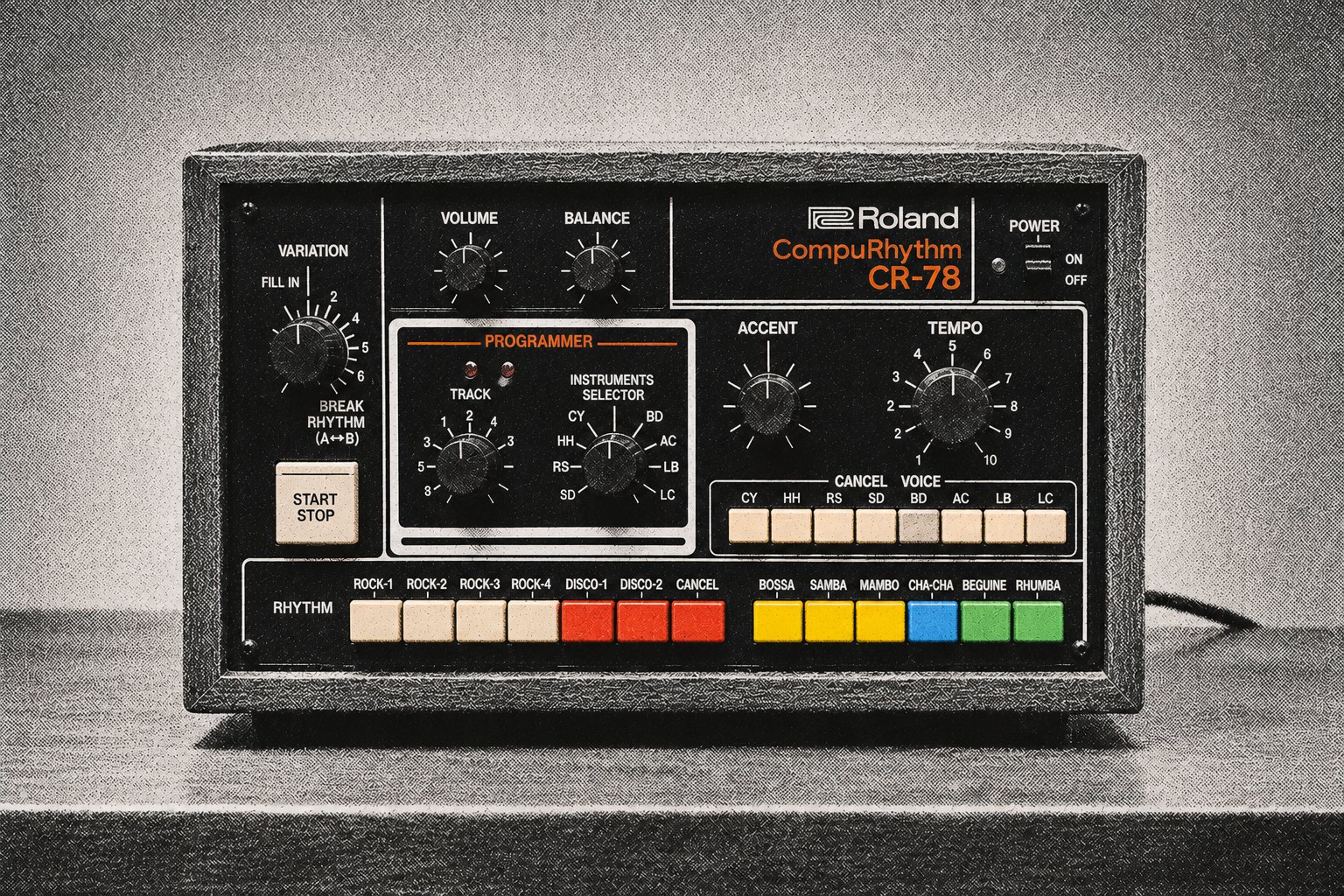
Wildly different models, some quite basic and others with possibilities I will probably never explore fully. But there is one drum machine that has always caught my attention in a special way: the Roland CompuRhythm CR-78, that small box with a wood finish, coloured buttons and barely a handful of controls.
I have never got to try one. And I won't lie and say I wouldn't like to own one. The problem is that we all know what these relics cost, especially when they are in good condition.
The Roland CompuRhythm CR-78 appeared in 1978, when I had not even been born yet. It was Roland's first programmable drum machine and one of the first commercial machines in its category that allowed you to create your own patterns and keep them in memory.
The odd thing is that nobody had conceived it to make techno, electro or experimental music. Roland was thinking of organists, keyboard players and musicians who needed rhythmic accompaniment. A rather modest function for a device that would end up appearing on some of the most recognisable pop recordings of the following years.
A machine ahead of its time
Before the CR-78, many drum machines worked basically as accompaniment machines. You chose one of the available patterns, set the tempo and let the device do its job. There were ways to combine rhythms and alter the accompaniment, but personal programming was still the exception.
The CR-78 also came with its collection of rhythms: rock, bossa nova, samba, disco, waltz and other styles. Up to there, nothing too surprising.
The difference was that it let you create and store your own patterns. It had four user memories, rhythmic variations, fills, tempo control and accents. All of it accompanied by a collection of analogue sounds that, heard today, still have a very particular personality.
Its percussion was soft, rounded and quite far from what we would expect of an acoustic drum kit. The kick, the snare, the cymbals or the small percussion seemed to belong to an imaginary drum kit. You could recognise the function of each sound, although none of them quite behaved like its real equivalent.
That is something I have always liked about the first drum machines. Manufacturers tried to build convincing accompaniments with the electronic resources available, and the result ended up having an identity of its own.
The CR-78 also allowed you to combine certain preset rhythms by pressing several buttons at the same time. A simple operation that could produce accompaniments different from those originally intended.
I picture myself in front of one, pressing buttons, mixing rhythms that in principle have little to do with each other and discovering unexpected combinations. I would probably spend quite some time doing that before trying to record anything.
Programming had its peculiarities too. To enter patterns step by step you used an optional accessory, the WS-1 Write Switch. There was also a small push-button, the TS-1, that let you enter the hits in real time.
It was not exactly the most comfortable system in the world. Today we are used to sequencers with lit-up buttons, screens and every kind of visual aid. In 1978, being able to enter a sequence and recall it later was already a considerable step forward.
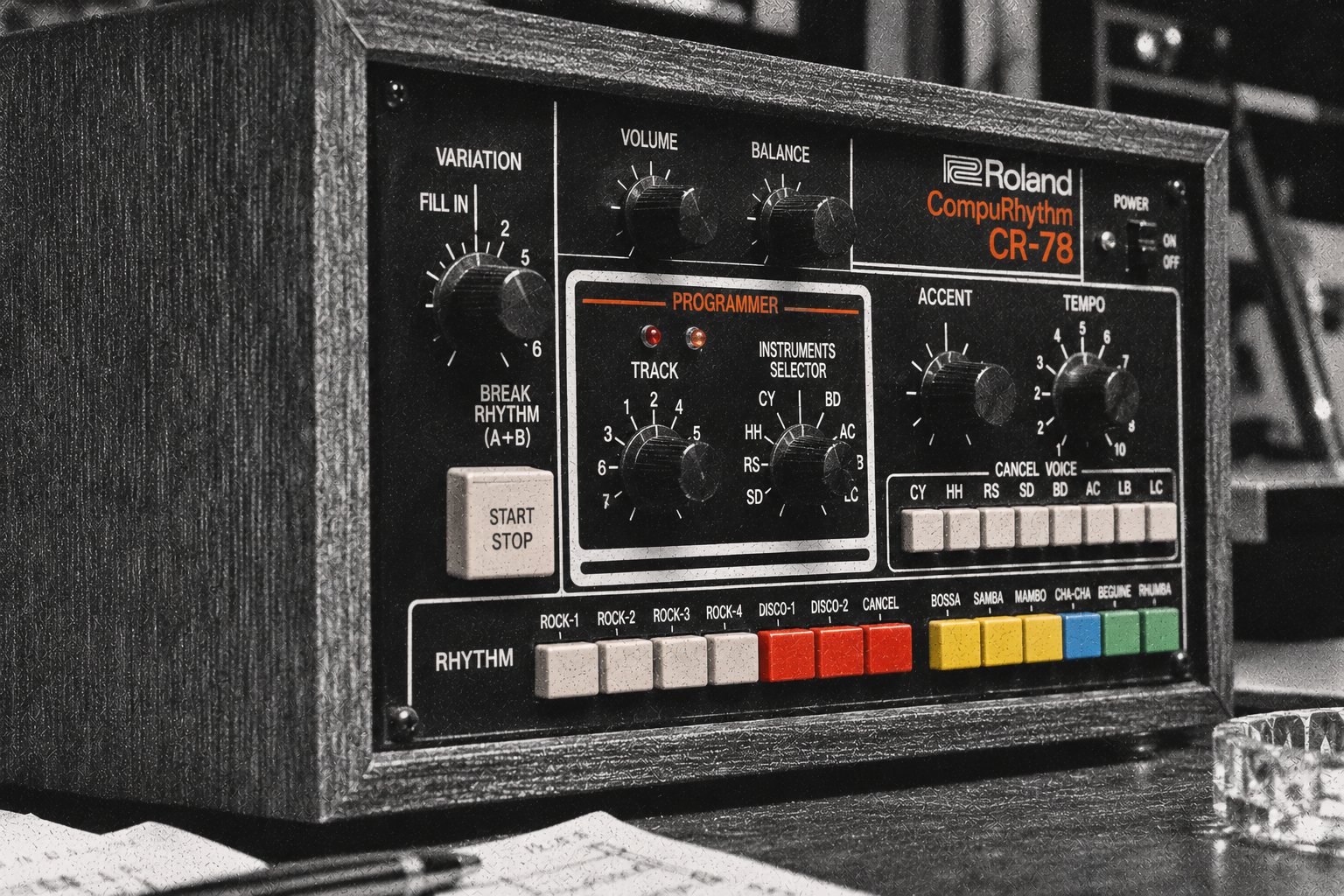
The CR-78 used an NEC microprocessor and a rechargeable internal battery that kept the stored patterns when the machine was switched off.
I still find it fascinating that a device from that era could remember what you had programmed. There is also something rather endearing in the fact that, almost half a century later, one of the worries of anyone buying a CR-78 is precisely the condition of that battery.
The technology that then seemed advanced ends up, over the years, becoming a matter of maintenance.
I had heard it hundreds of times and didn't even know it
As a kid I was always recording cassette tapes of music off the radio. Then I would listen to them over and over, until the tapes started to show signs of wear.
It was my way of satisfying that restlessness to find out how songs were made, which instruments they used and where certain sounds I couldn't identify came from.
I didn't have many tools to find out. I listened, rewound and listened again. Sometimes I became obsessed with a sound that appeared for barely a few seconds and that, for some reason, struck me as more interesting than the rest of the song.
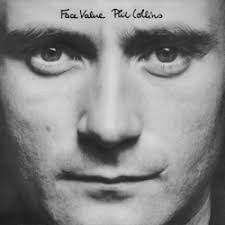
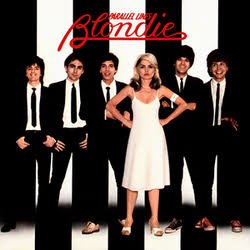
In time I began to notice something strange in the percussion of certain recordings by OMD, Phil Collins or Blondie. It didn't sound like a traditional drum kit. There was a regularity and an electronic texture that set it apart from acoustic instruments. Much later I discovered that those songs shared one instrument: the Roland CR-78.
The best-known example is probably “In the Air Tonight”, by Phil Collins.
We all remember the drum entrance that comes towards the end of the song. It is one of those moments that have ended up living a life of their own, reproduced, imitated and used to the point of exhaustion.
But before that fill arrives, for a good part of the track, we hear the CR-78 pattern.
It is a restrained, almost discreet percussion that accompanies the voice and helps to sustain the tension. The song seems to move towards something that takes an eternity to happen. And when the acoustic drums finally come in, the contrast is enormous.
I am especially interested in that coexistence between two ways of understanding rhythm. On one side, the mechanical precision of the drum machine; on the other, the physical intervention of a drummer who, in this case, was also one of the most recognisable of his generation.
Collins has said that he was given a Roland drum machine during a Genesis tour of Japan. It is amusing to think of a professional drummer coming across a machine designed to replace, at least in certain circumstances, the need to have one.
And that he ended up using it on one of his most famous songs.
The CR-78 also appears on “Heart of Glass”, by Blondie, a recording in which the band openly explored disco music and the possibilities of electronic instruments. In that context, the regularity of a drum machine made quite a lot of sense.
The interesting thing is that the same machine could find a place in very different songs. Its sounds didn't force you to work within a specific genre. They could live alongside guitars, synthesisers, pop vocals or acoustic drums.
Much later I discovered that those songs shared one instrument: the Roland CR-78.
I suppose that is why it took me so long to recognise it. I had heard its sound hundreds of times without knowing it came from the same device.
Roland didn't set out to build a futuristic machine
There is a rather funny contradiction in the history of the CR-78.
Its catalogue of rhythms was designed to accompany perfectly recognisable musical styles: waltz, tango, cha-cha-cha, bossa nova or enka, a form of Japanese popular song.
There was no apparent intention of inventing a new musical genre. The aim was to offer the player a selection of useful accompaniments.
Its look didn't announce any revolution either. The wood finish, the coloured buttons and the layout of the controls fitted perfectly into the aesthetic of late-seventies home equipment.
It could have been sitting in a living room, next to an electronic organ, without arousing much curiosity.
But some musicians found in it something that went beyond its original function.
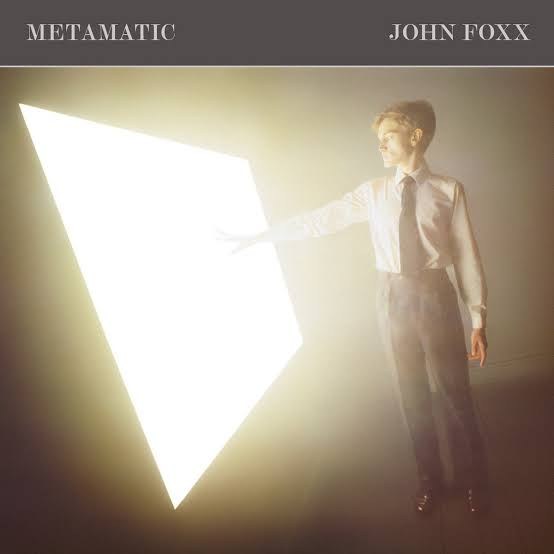
John Foxx, one of the artists who explored the possibilities of electronic instruments in British pop at an early stage, has spoken about the peculiar interpretation of Western rhythms offered by these Japanese machines.
It is a suggestive observation. A Japanese manufacturer builds into its devices electronic versions of rhythms from different musical traditions. Then European and American musicians use those interpretations to build songs that no longer have much to do with the original styles.
A bossa nova stops being necessarily a bossa nova when its sounds are combined with other patterns, its accents are changed or it is used outside the context it was programmed for. The instrument begins to lead a life its designers could hardly have foreseen.
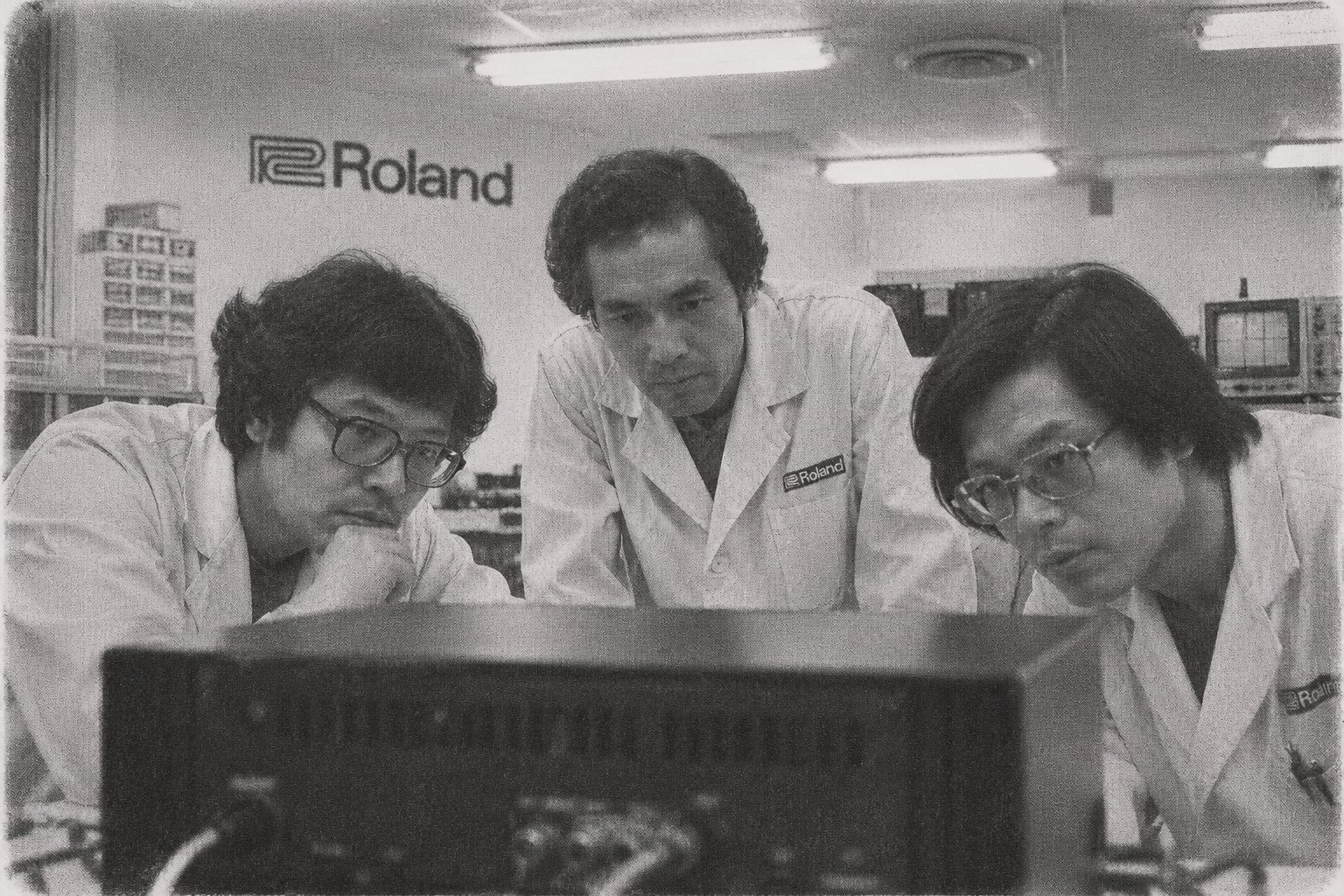
I like to think that one of those engineers got to hear what artists like John Foxx, OMD or Phil Collins were doing with their machine. Perhaps they would have recognised the sounds immediately. Recognising the use they were being put to would be another matter.
In time, the CR-78 found its place in recordings by very different artists. Roxy Music, Blondie and other groups who were bringing electronics into their songs found in these drum machines an alternative to traditional accompaniments.
And its influence did not end with the arrival of more advanced models. Later musicians and producers, Moby among them, have continued to turn to the sounds of those first Roland machines.
It is curious that an instrument designed to reproduce familiar rhythms ended up being appreciated precisely for how strange it could sound.
Much more than a few rhythms
The CR-78 had another feature worth remembering: it could interact with other electronic instruments through sync and trigger connections.
In the late seventies, when communication systems between instruments were far from the standardisation that would come later with MIDI, these possibilities opened up interesting ground for those working with synthesisers and sequencers.
Of course, it wasn't as simple as connecting two current devices with a USB cable. You had to know the particularities of each piece of equipment, its clock signals and its limitations.
But the possibility of different machines working together was already there.
The CR-78 arrived before two of the most important drum machines in history, the Roland TR-808 and TR-909. Those models would considerably widen the programming possibilities and end up associated with entire musical genres.
The 808 became a fundamental piece of electro, hip-hop and numerous strands of electronic music. The 909 would find a privileged place in the development of house and techno.
The CR-78 had a somewhat different fate. It never came to be identified so exclusively with one musical scene. Its sounds turned up in pop songs, electronic experiments and productions that didn't necessarily share an aesthetic.
Perhaps that lack of belonging to a specific genre explains part of its appeal.
There is also something about the way it works that interests me.
Nowadays we can modify practically any parameter of a drum machine. Change the tuning of a kick, alter its envelope, apply effects, automate movements and store hundreds of patterns. In some cases the possibilities are so wide that it is hard to decide where to start.
It has happened to me more than once. I switch on a machine intending to record something and end up spending an hour tweaking sounds, trying effects or exploring functions I didn't even know it had. By the time I finally find something I like, sometimes I have already lost the urge to make music.
With the CR-78, a good part of those decisions had been made in advance. Its sounds had certain fixed characteristics and the ways of modifying them were limited. You could work with the patterns, the variations, the tempo and the combinations, but not transform each instrument until it was unrecognisable.
That could be a frustration or an advantage, depending on what you wanted to achieve. I don't mean to idealise its limitations. I am sure many musicians in 1978 would have welcomed some of the features we now take for granted. And I would probably be the first to miss them after a few hours with an original.
I would like to sit down in front of one, without too many expectations, and spend an afternoon trying out combinations.
But I like to imagine a session in which the work consists essentially of listening to what the machine does, finding an interesting combination and building something around it.
No firmware update. No searching for a tutorial. No wondering whether there is a more recent version of the instrument I have just bought.
A small wooden box that still sounds current
Almost fifty years after its release, the sounds of the CR-78 are still present in modern instruments, sample libraries and music production software.
It is possible to work with them without ever getting near an original unit.
I myself can use them and sequence them on some of my Roland drum machines. And, from a practical point of view, I have far more possibilities for manipulation than the 1978 device offered.
And yet, I still want one.
I don't think it is only a question of sound. I am also drawn to the physical relationship with these instruments. Switching them on, pressing their buttons, hearing how they respond and learning to work with their quirks.
I have a DIY clone of the Korg MiniPops, so I can't claim I need an original machine to enjoy that kind of percussion either. But the CR-78 has been going round in my head for far too long.
I would like to sit down in front of one, without too many expectations, and spend an afternoon trying out combinations. I would probably start by trying to reproduce one of those patterns I have been listening to since I was little. Then I would end up doing something else entirely, which is usually the most fun part when you start tinkering.
It is also possible that I would find the experience isn't as wonderful as I imagine. That its controls are awkward, that I miss certain functions or that, after a few hours, I prefer to go back to my TR-8S.
It wouldn't be the first time an old instrument turns out to be more attractive in our imagination than on the work table.
Although I suspect that, even then, I would find it hard to part with it.
After all the drum machines that have passed through my hands, some of them far more advanced, I still look from time to time at the listings for a small machine from 1978.
The price usually brings me back to reality quickly.
And I carry on with my modern Rolands, listening to those same sounds and thinking that one day I will find a CR-78 I can afford.