Kraftwerk: The Man-Machines and the World They Built
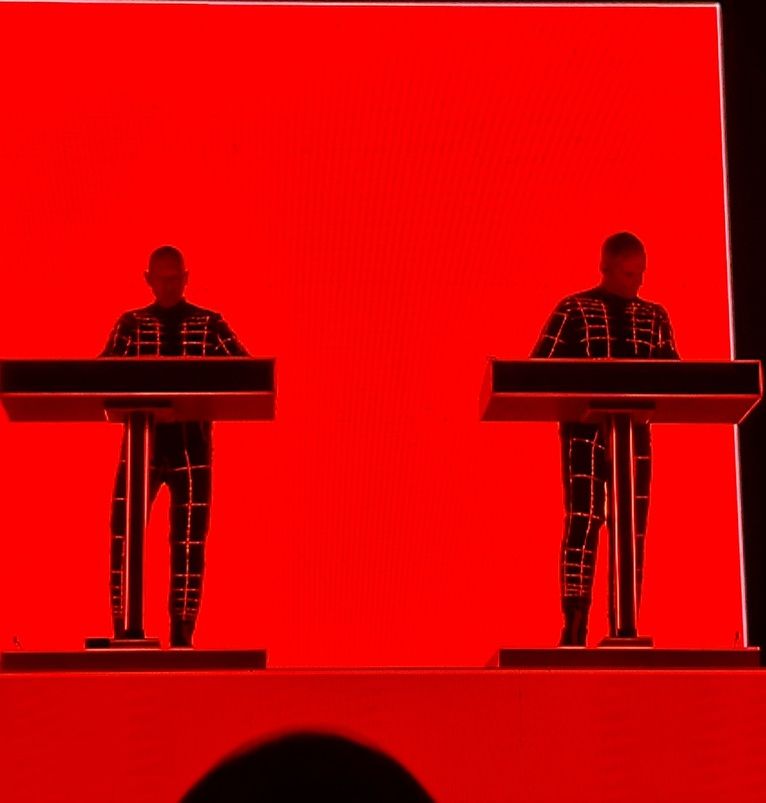
A chronicle of Kraftwerk's concert at Es Jardí (Mallorca), or why certain works seem to gain new meanings every time the world changes around them.
The main surprise of the concert Kraftwerk played last night at Es Jardí was, precisely, the absence of surprises.
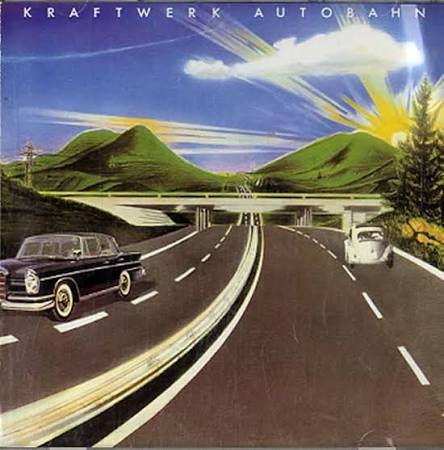
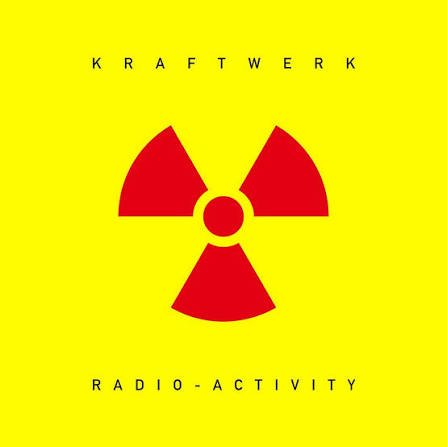
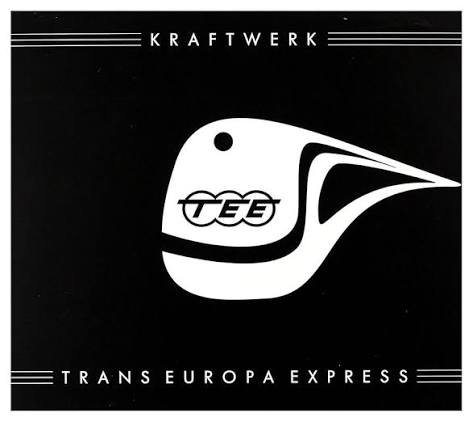
Anyone who has followed the German band's recent trajectory knew exactly what to expect. The setlist has barely changed in years. The visuals that accompany each song are by now an inseparable part of the work. The highways of Autobahn, the trains of Trans-Europe Express, the computers of Computer World, the nuclear iconography of Radioactivity, or the robots that appear in the show's final stretch make up a perfectly recognizable language. Even the staging — the musicians lined up behind their electronic consoles, gestures pared down to almost nothing — has long since become as permanent a fixture as the songs themselves.
And yet it's hard to leave a Kraftwerk concert with the feeling of having sat through routine. What's genuinely striking is realizing that an artistic vision developed decades ago still feels remarkably contemporary without needing to reinvent itself. While most popular music lives under a constant obligation to be new, Kraftwerk seems to have settled into a kind of permanent present. Their concerts barely change. What changes is the world around them.
Maybe that's why watching Kraftwerk in 2026 feels especially revealing. You're not so much attending a band's performance as witnessing the reactivation of an artistic work that has spent more than half a century in dialogue with questions that still define contemporary experience: technology, communication, identity, mobility, and the increasingly complex relationship between human beings and machines.
An anomaly in popular culture
It's hard to find a group comparable to Kraftwerk in the history of popular music. Not because they were the first to use electronic instruments, nor because they single-handedly invented electronic music — a claim as historically simplistic as it is unfair to the many pioneers who came before them. Kraftwerk's true singularity lies elsewhere.
From their beginnings in Düsseldorf, Ralf Hütter and Florian Schneider seemed to understand that music could be something more than a string of songs. Around it they built a visual identity, an aesthetic, a cultural imaginary of almost obsessive coherence. The album covers, the photography, the graphic design, the typography, the stage sets, the costumes, the videos, even the band's own public demeanor, all answered to a single artistic vision.
In an era still dominated by rock's romantic iconography, Kraftwerk chose to replace the charismatic musician with something radically different. Its members appeared as system operators, engineers, specialized technicians. The heroic gestures vanished. Rock's traditional expressiveness gave way to a sober, deliberately distant elegance. Even the musicians themselves seemed intent on dissolving behind the work.
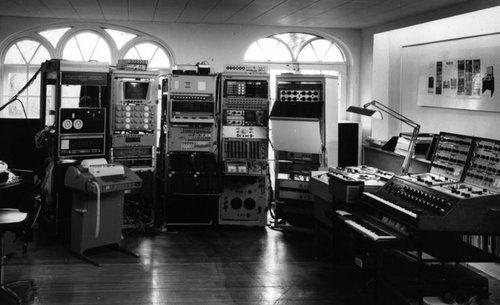
That will to depersonalize fed the legend of Kling Klang, the studio where the band produced most of its work. For decades, Kling Klang was described almost as a secret laboratory where the sound of the future was being designed. The reality was far less spectacular and, precisely for that reason, more fascinating. As Hütter himself explained, the studio began as little more than a converted room in an industrial part of Düsseldorf. There, far from any futurist mythology, the band spent endless days building instruments, modifying equipment, and experimenting with new sonic possibilities.
Their favorite way of describing themselves was particularly telling. They didn't think of themselves as stars, or as inspired artists. They called themselves Musik-Arbeiter: music workers. The phrase sums up much of their philosophy. While rock celebrated excess, instinct, improvisation, Kraftwerk embraced discipline, design, precision. A line of Hütter's illustrates this way of understanding creation perfectly: they'd spend a month on the sound and five minutes on the chord changes.
More than composers in the traditional sense, they acted as architects of sonic experience.
Modernity turned into music
Kraftwerk's deepest contribution was understanding that modernity itself could become artistic material. On the surface, many of their songs seem built around themes with little promise for musical composition. Highways, trains, radios, computers, calculators, power plants, robots — none of it fits easily into popular music's lyrical tradition. And yet Kraftwerk managed to turn every one of those elements into cultural symbols capable of expressing much larger questions.
- Autobahn isn't really a song about a road. It's a reflection on movement, speed, and the experience of travel in postwar industrial Europe.
- Trans-Europe Express uses the train as a stand-in for a European identity built on the movement of people, ideas, and cultures across the continent.
- Radioactivity raises a far more ambiguous question. Beneath its apparent fascination with radio, energy, and technological communication lies a reflection on the risks that inevitably accompany technical progress. Tellingly, fifty years after its release, it remains one of the most unsettling pieces in their catalogue.
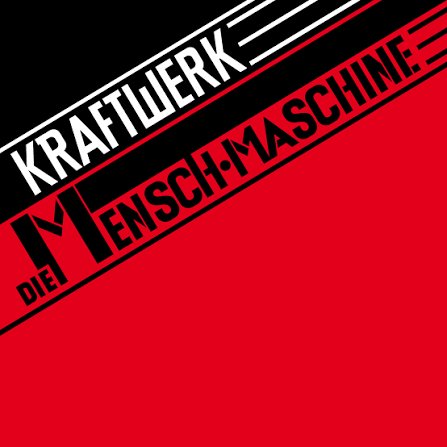
- The Man-Machine develops what is probably the central idea of Kraftwerk's entire body of work: the gradual dissolving of the border between human being and machine.
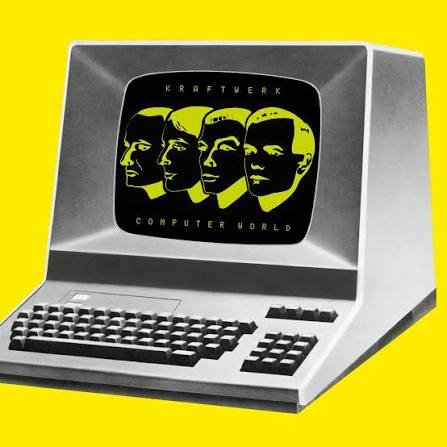
- And finally Computer World, released in 1981, stands as one of the most extraordinary exercises in cultural observation in twentieth-century music.
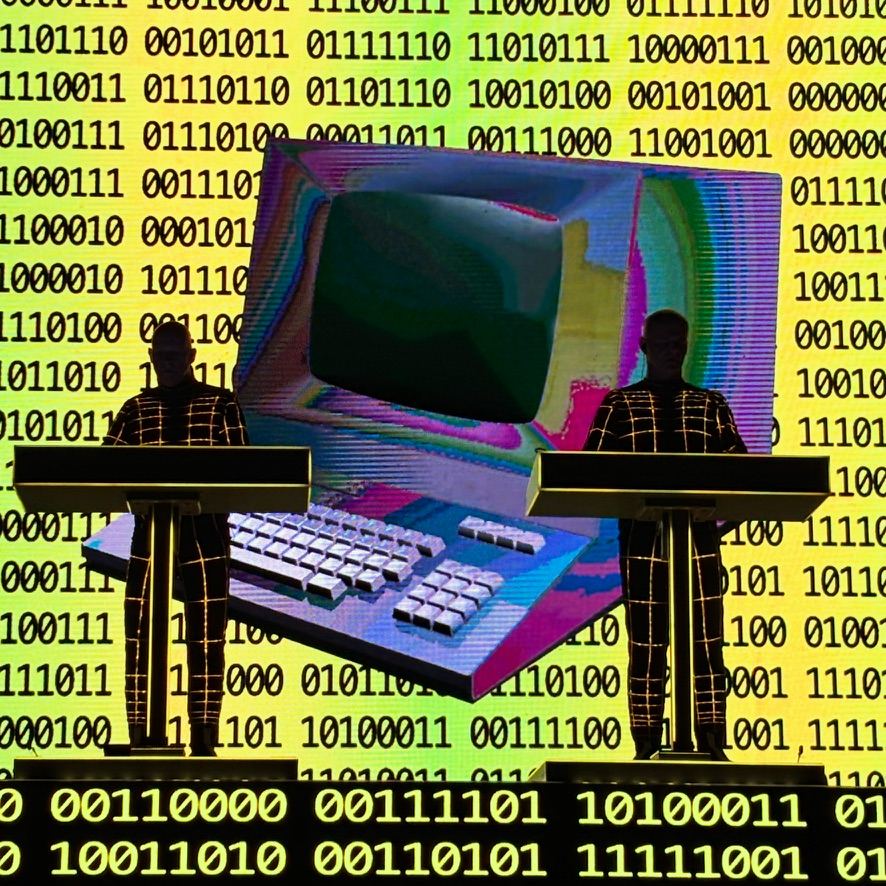
It's often said that Kraftwerk predicted the internet. The truth is more interesting than that. What they did was identify a historical shift that had barely begun to show itself. When that album came out, computers were still fairly specialized tools. Digital life was still a long way from the average citizen. And yet Hütter and Schneider seemed to grasp that computing would stop being a mere instrument and become the environment in which many aspects of human existence would unfold. Heard today, Computer World produces a strange sensation. It doesn't feel like a futurist work. It feels like a documentary.
The mistake of calling Kraftwerk a cold band
One of the most persistent clichés about Kraftwerk describes them as a cold, cerebral, dehumanized band. The reading is understandable. The mannequins, the synthesized voices, the robotic aesthetic, the fascination with technology all seem to justify it. But it only takes listening closely to a few of their best compositions to see that this reading falls short.
In reality, Kraftwerk's work carries a deep emotional current that often goes unnoticed beneath its mechanical surfaces. "Computer Love" is still one of the clearest examples. What presents itself as a song about computers ends up becoming a reflection on loneliness, the desire for connection, the search for company. Hearing it in 2026, in a society where a significant share of personal relationships plays out through digital platforms, is almost unsettling.
In the same way, "Neon Lights" turns the urban landscape into a poetic experience loaded with melancholy, while "The Model" examines questions of image, representation, and desire long before social media made those issues central to everyday life. Maybe that's why it's so reductive to read Kraftwerk as a simple ode to machines. What always interested them was how human beings live alongside them. In their work, technology functions as a mirror.
The world catches up with Kraftwerk
One of the most lasting impressions left by the Mallorca concert is the sense that the world has been steadily catching up with the conceptual universe the band imagined. When Kraftwerk sang about global communication networks, the internet as we understand it today didn't exist yet. When they sang about relationships mediated by computers, dating apps still belonged to the realm of speculation.
When robotic figures appeared on stage, artificial intelligence was still a subject confined to science fiction and research labs. Today, though, we live day to day alongside virtual assistants, algorithms, automated systems, and artificial intelligence capable of generating text, images, or complex conversation. The question posed by "The Robots" no longer belongs to the future. It belongs to the present.
Something similar happens with the European dimension of their work. Few bands have reflected so persistently on Europe as Kraftwerk. Trains, borders, stations, journeys, languages appear constantly throughout their catalogue. Seen from Mallorca, an island historically crossed by cultural and human currents from across the continent, that vision takes on a particular resonance. What in the seventies might have read as a technocratic fantasy now looks like a fairly precise description of contemporary European reality.
A conversation that runs across generations
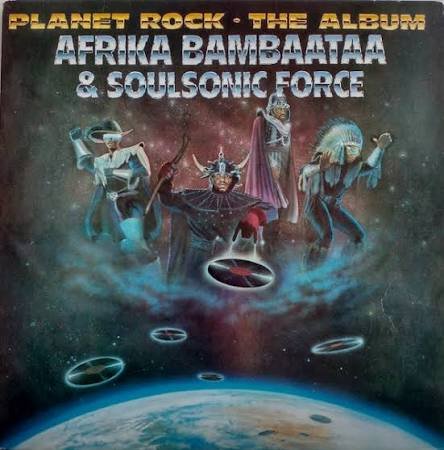
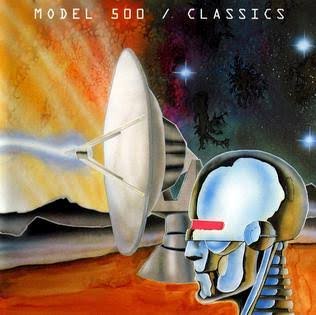
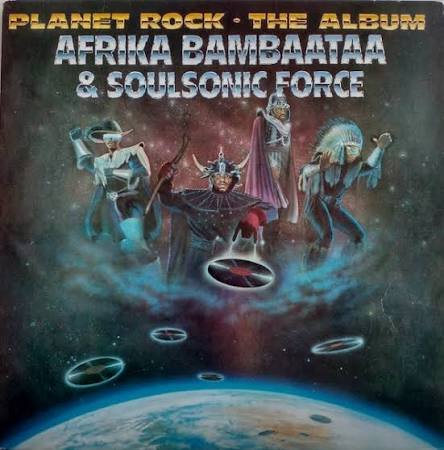
Kraftwerk's influence is so vast it practically merges with the recent history of popular music itself. Their legacy isn't limited to inspiring later generations of electronic musicians; in many cases, they directly helped create entirely new musical languages. When Afrika Bambaataa released "Planet Rock" in 1982, borrowing elements from "Trans-Europe Express" and "Numbers," he built one of the strangest bridges in music history: the one connecting Düsseldorf's minimalist electronics to the Black culture of the Bronx and to hip hop's earliest developments. A few years later, in Detroit, Juan Atkins, Derrick May, and Kevin Saunderson found in Kraftwerk the sonic vocabulary that would go on to shape techno, turning those mechanical European sequences into the soundtrack of a declining industrial city. The influence kept spreading through British synth-pop acts like Depeche Mode, New Order, OMD, and Pet Shop Boys, reached Ryuichi Sakamoto and Yellow Magic Orchestra in Japan, and remains audible in artists much further downstream, like Daft Punk, or even in Radiohead's electronic excursions. What's extraordinary isn't just the geographic reach of that legacy, but its ability to cross genres, cultures, and generations without losing its coherence.
The tribute to Sakamoto during the Mallorca performance made that whole web of connections visible. For a few minutes, the concert stopped being a technological demonstration and became something much simpler and more human: a gesture of recognition between artists who, from different corners of the world, took part in the same cultural conversation.
Because maybe the story of Kraftwerk is also the story of an uninterrupted conversation between Düsseldorf, the Bronx, Detroit, Tokyo, London, Berlin, and New York. A conversation about technology, art, and modernity that's still going, half a century after it began.
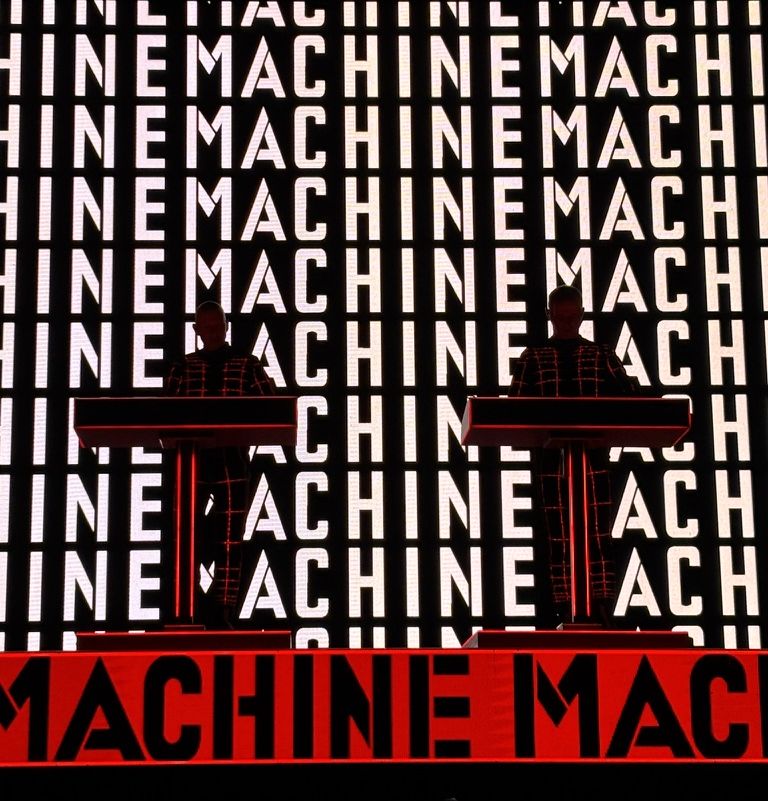
We Are The Robots
Closing with "The Robots" felt inevitable. Not because it's one of their most popular songs. Not because it's one of the show's most recognizable moments either. It was inevitable because, more than any other, it sums up the conceptual core of their entire trajectory.
In 1978 it could be heard as a mix of irony, futurist fascination, and cultural commentary. In 2026 it takes on a different meaning. We live immersed in a technological environment that would have seemed extraordinary when that song was written.
And yet the fundamental questions remain open.
- What place does human autonomy hold in an increasingly automated society?
- How far do we delegate our decisions to technological systems?
- Where does the tool end and the dependency begin?
Kraftwerk never offered definitive answers. Their achievement was asking the right questions.
Leaving Es Jardí, the prevailing feeling wasn't of having sat through an exercise in nostalgia. Nor of having witnessed some spectacular innovation. Kraftwerk's concerts no longer aim to surprise. They don't need to.
Their real strength lies in something much rarer: proof that a work conceived half a century ago keeps finding new ways to speak to the present. As the world keeps changing, those songs about highways, power plants, radios, computers, and robots retain the power to explain essential aspects of our contemporary experience.
Maybe that's the ultimate reason for their significance. Kraftwerk didn't just influence music. They managed to turn modernity itself into a form of art. And, as happens with all great works, it keeps revealing different meanings every time we return to it.