The Impossible Nostalgia of Boards of Canada
Why we still miss futures that never came to exist.
For a stretch of the late nineties I spent a lot of hours on Line 6 of the Madrid Metro. The grey one. The circular one. The one that seems designed to make you go round in circles.
Music filled almost every free gap in the day. On the metro, walking down the street, crossing endless corridors, or just heading home after work. Headphones were a form of voluntary isolation.
Madrid, 1998
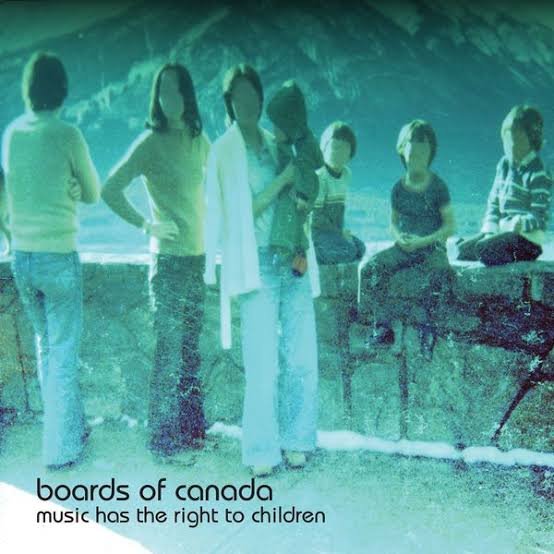
At some point in 1998, a Scottish group called Boards of Canada showed up in my headphones. The record was Music Has The Right To Children. I don't remember exactly who told me about it. Nor where I bought it. What I do remember is the feeling. That music didn't sound like anything else I was listening to at the time. It didn't sound futuristic. It didn't sound retro. It didn't sound modern. It didn't sound old. It didn't come from anywhere clearly identifiable.
Some tracks come back more than others: "Roygbiv," "Telephasic Workshop." Not because I understood what those two Scots were doing, but because they produced an effect I couldn't name. There was music you liked. There was music that surprised you. And then there was that music, which worked differently. You weren't discovering something new. You were remembering something forgotten.
Years later I'd find out the group's name came from the National Film Board of Canada. I'd find the educational documentaries, the hidden references, the children's programs, the seventies science-fiction films, and that whole cultural universe feeding their records.
But in 1998 I knew none of that. I'd never seen those documentaries. I hadn't lived in those woods. I didn't know those schools. I didn't share those references. And yet the music felt familiar to me. Over the years I thought that was down to nostalgia. It was the easy answer. Nostalgia usually points at something concrete. A city, a person, a stage of life, a childhood.
But the more I thought about the Scottish duo, the less that explanation convinced me. Because nostalgia usually starts from something lived. And I had never lived any of that.
How is it possible to miss something you've never known? That question has stayed with me for almost thirty years now. Maybe the answer has less to do with Canada and more to do with the generation I belong to.
For years I thought the group interested me because it spoke about the past. The explanation seemed obvious. There were the worn-out synthesizers, the children's voices, the references to memory, the permanent sense of listening to something rescued from a forgotten tape.
Those of us born in the mid-seventies occupy an uncomfortable spot. We weren't children of the purely analog world, but we didn't grow up digital either: we were the hinge generation. We remember tapes recorded by friends, photographs that took days to develop, record shops, boredom. Boredom above all, so discredited today. But it mattered: it forced you to imagine, to stumble onto things by accident. Imagination occupies whatever space information leaves free. The gaps mattered, the dark zones mattered. That's why the group still feels so peculiar: their entire music is built out of gaps. Incomplete images. Half-told stories. Blurred memories. Nothing is ever fully explained.
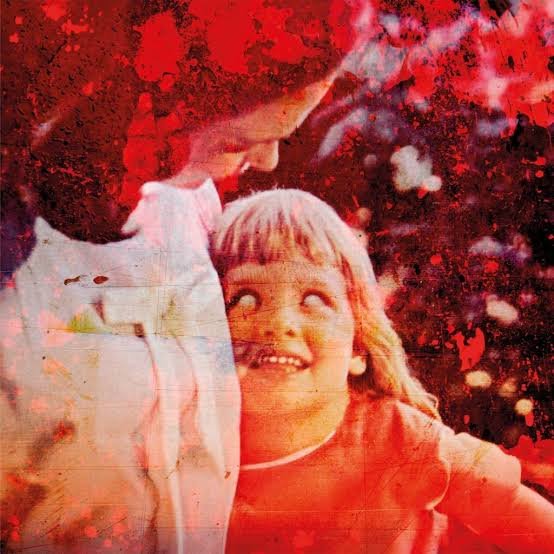
Over the years I've read interviews, essays, forum threads, analyses, and I've kept tripping over the same categories again and again, each one promising to finally explain what I felt that morning on Line 6. Svetlana Boym distinguishes between a restorative nostalgia — one that wants to literally rebuild the past, an origin, a flag — and a reflective nostalgia, which lingers in the fracture itself, in the awareness that return is impossible; my case didn't quite fit either one, because there was no past to return to, not even a fractured one. David Lowenthal argues that all nostalgia is, at bottom, a form of foreignness: we long for a country we could no longer move to because it doesn't exist on any map; that came closer, but it still assumed I had set foot in that country at some point, and I hadn't. And then there's Mark Fisher, who named that very specific sensibility hauntology — pop culture obsessed with aborted futures, with progress's broken promise, with the hiss of a degrading tape — and who used that same term to talk about Boards of Canada. All of that is true, and all of it helps. But none of those categories fully describes the original sensation, the one that showed up on an ordinary morning on Line 6, with no vocabulary yet, long before I knew it had a name.
That was recognition: the feeling of having already been somewhere I had never been.
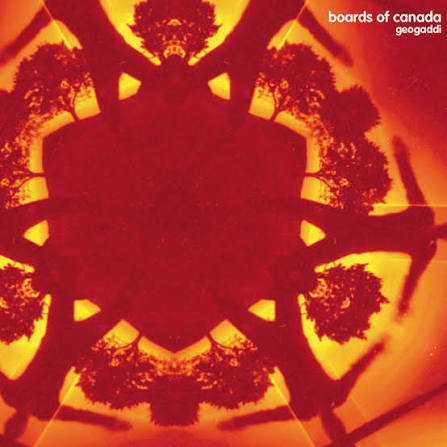
Geogaddi arrived in 2002, and with it something twisted. The same tools from Music Has The Right To Children — the worn synthesizers, the children's voices, the promise of shelter — were still there, but they produced something else: doubt, disorientation. Memories stopped being safe places. Childhood, which until then had worked as a refuge, became an ambiguous territory, full of shadows and unanswered questions. Boards of Canada was no longer rebuilding the past. It was starting to explore its cracks.
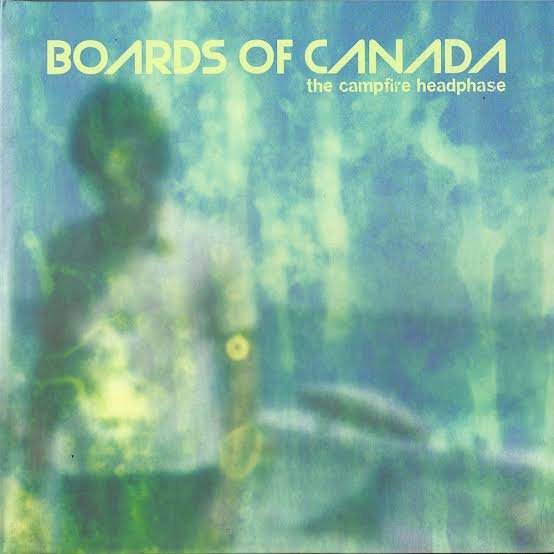
The Campfire Headphase (2005) is the road record. It arrives like a rolled-down window after the maze of Geogaddi: guitars, horizons, movement, nature — escape still felt possible. For years I dismissed it as the minor work in the discography, the hinge between two important records. Heard today, though, it sounds different: almost a mirage, the last moment when it was still possible to run from the noise, the speed, the world's mounting complexity. Maybe that's why it feels so moving seen from the vantage point of Tomorrow's Harvest, as if the Sandison brothers had spent a few years staring at the horizon before realizing the storm was already on its way.
Meanwhile, the world began to accelerate. Social media had stopped being a curiosity. The internet was no longer a tool: it was starting to become the environment where much of everyday life took place. The algorithms were already there, though we didn't yet talk about them constantly or understand how completely they would end up organizing our attention.
Valencian Community, 2013
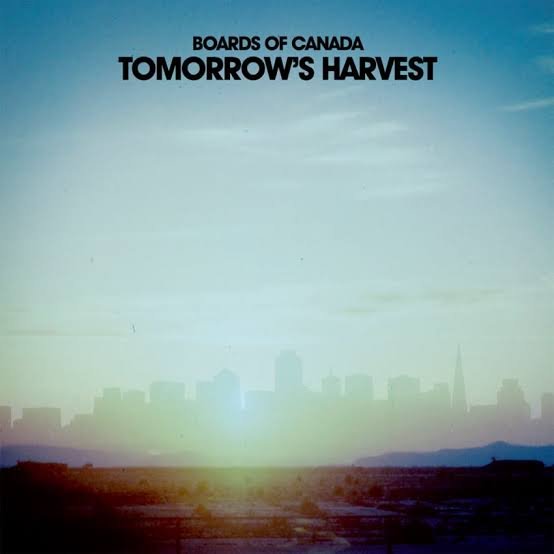
When Tomorrow's Harvest came out in 2013, many of those transformations were already under way. Heard today, the record is less a work about the future than a work about things that were happening right in front of us that we hadn't yet learned to see.
I listened to Tomorrow's Harvest on many drives through the Valencian Community. I'd spend hours driving with the Mediterranean showing up now and then in the background. It was regular company for long trips. The strange part is that the music contradicted everything in front of me.
I'd heard the record described as post-apocalyptic. And yet, outside the window, there was still the Mediterranean. The clean coastal light. The orange groves. The huge skies of summer evenings. The same light Sorolla had painted a century earlier with almost miraculous precision. Nothing seemed to be announcing any disaster. And yet there was something in Tomorrow's Harvest that produced a persistent unease: less a sense of immediate catastrophe than something harder to explain. As if the record were trying to point at changes too slow to register in real time.
That's probably why it took me years to understand the record. I expected a soundtrack for the end of the world and ended up finding something far more uncomfortable: a soundtrack for a world that keeps apparently functioning fine while leaving behind possibilities it doesn't even know it's losing.
The world doesn't collapse: it narrows, slowly, without noise. And disaster doesn't threaten from the future. It has already begun, and we keep acting as if we hadn't seen it.
Over time I've come to think part of that unease has to do with something Simon Reynolds diagnosed in Retromania: a culture with total access to its own archive stops needing to invent a future, because recycling the past is always cheaper. We live in an age that offers a seemingly infinite amount of information, music, images, and opinions, and that nonetheless pushes everyone toward the same places: the same platforms, the same algorithms recommending whatever we already liked before. Mike Sandison himself would say as much without needing any theory: modern technology gives the illusion of empowering people when what it's increasingly doing is stripping away freedom and homogenizing the user. We had never had so many options, and it had rarely been so easy to feel that everyone ends up walking similar paths. Seen that way, Tomorrow's Harvest doesn't sound like the soundtrack to a physical collapse. It sounds like the soundtrack to a culture that was, in Reynolds's words, retromaniac without knowing it yet.
Somewhere in that archive of old interviews I found the line that came closest. Il Mucchio Selvaggio, 2013: Mike Sandison said the world changes all the time, and that it's very easy to think the past was more beautiful than the present, whatever present you happen to be living in. It isn't a nostalgic's confession. It's almost the opposite: a warning that nostalgia always lies, in any decade, by the same mechanism. What interests me, interview after interview, is an even more uncomfortable question: was it inevitable that we'd end up here? That's how Mike talks, always looking at the bigger landscape. Marcus talks differently: more musical, more emotional, wondering how to make all that audible.
Maybe that's why their records produce such a strange effect. Because they keep speaking about another possibility. A road we never took. A city we never lived in. A different version of ourselves.
For thirteen years there was nothing. Silence, rumors, the odd loose interlude, an almost total disappearance from public life. And yet the silence didn't feel like absence. It felt like part of the method: the next record starts existing precisely in that gap, in the waiting, before a single note plays.
Barcelona, 2026
And then, in 2026, Inferno began taking shape. And something slightly ridiculous happened. In the spring of 2026 I found myself doing something I thought was reserved for another era. Following clues. Reading theories. Interpreting signals. Chasing impossible connections. Waiting for news. A grown man like the one writing this, following cryptographic clues designed by two Scots who put out records once a decade, hardly sounds like the most mature definition of human existence. And yet there I was. Caught, once again, completely.
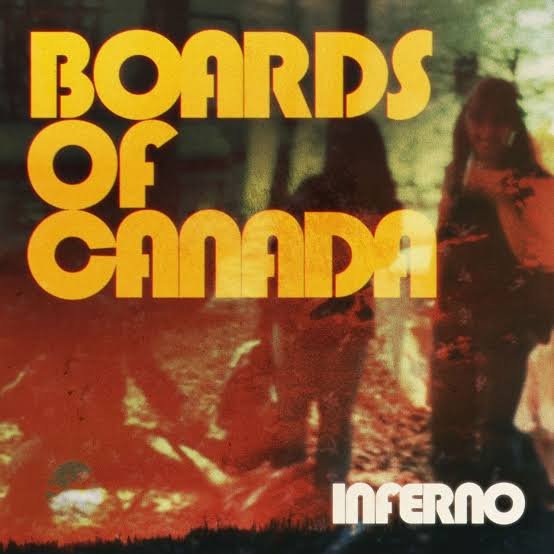
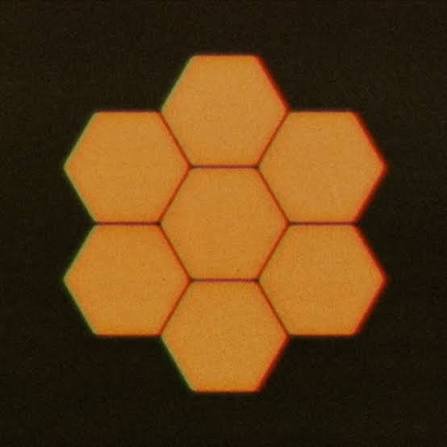
That obsession ended up taking me to Barcelona, to the Inferno Sessions: private listening events for the record, organized by the group in hand-picked venues, reserved for those of us who managed to get hold of one of the scarce tickets, several months before the record went on sale. More than a conventional listening session, it felt like a mix of presentation, art installation, and collective ritual for especially patient followers. The room was bathed in reddish light. Projections of the hexagonal symbol associated with Hexagon Sun turned slowly across walls, ceilings, and screens. A continuous ambient hum played as people took their seats, along with a kind of vertigo, the sense of stepping into a place outside time.
What stuck with me most were the diamonds projected onto a big red curtain. The orange lighting rose from below and turned that simple geometry into something almost hypnotic. It looked like fire, a ceremony, a warning. Or simply a brilliant staging designed to switch on the imagination of those of us who had spent years waiting for that moment. Probably it was a little of everything at once.
And as I watched that spectacle, I realized something: the emotion I was feeling wasn't new. Deep down it was a lot like what I'd felt decades earlier on Line 6 of the Madrid Metro.
And that's when I understood something. I'd spent three decades chasing the same feeling: the certainty that the world still held secrets, that not everything had been explained, that there were still territories left unmapped.
That's why I think the impossible nostalgia of Boards of Canada has nothing to do with Canada. Or Scotland. Or childhood. Not even with the past. It has to do with something else. With a way of relating to the world built on curiosity, on waiting, on discovery. On accepting that not every question has an answer.
I don't miss the nineties. I don't even miss my youth. What I miss is the feeling that other possible paths still existed. And that's why I keep listening to Boards of Canada. Not because they take me back to the past. But because they keep reminding me of something the present tries to make us forget: that things could have been different. That the world wasn't inevitable. And that somewhere in the imagination, some of those futures that never came to exist still survive.
Sometimes it only takes a song to find them again.