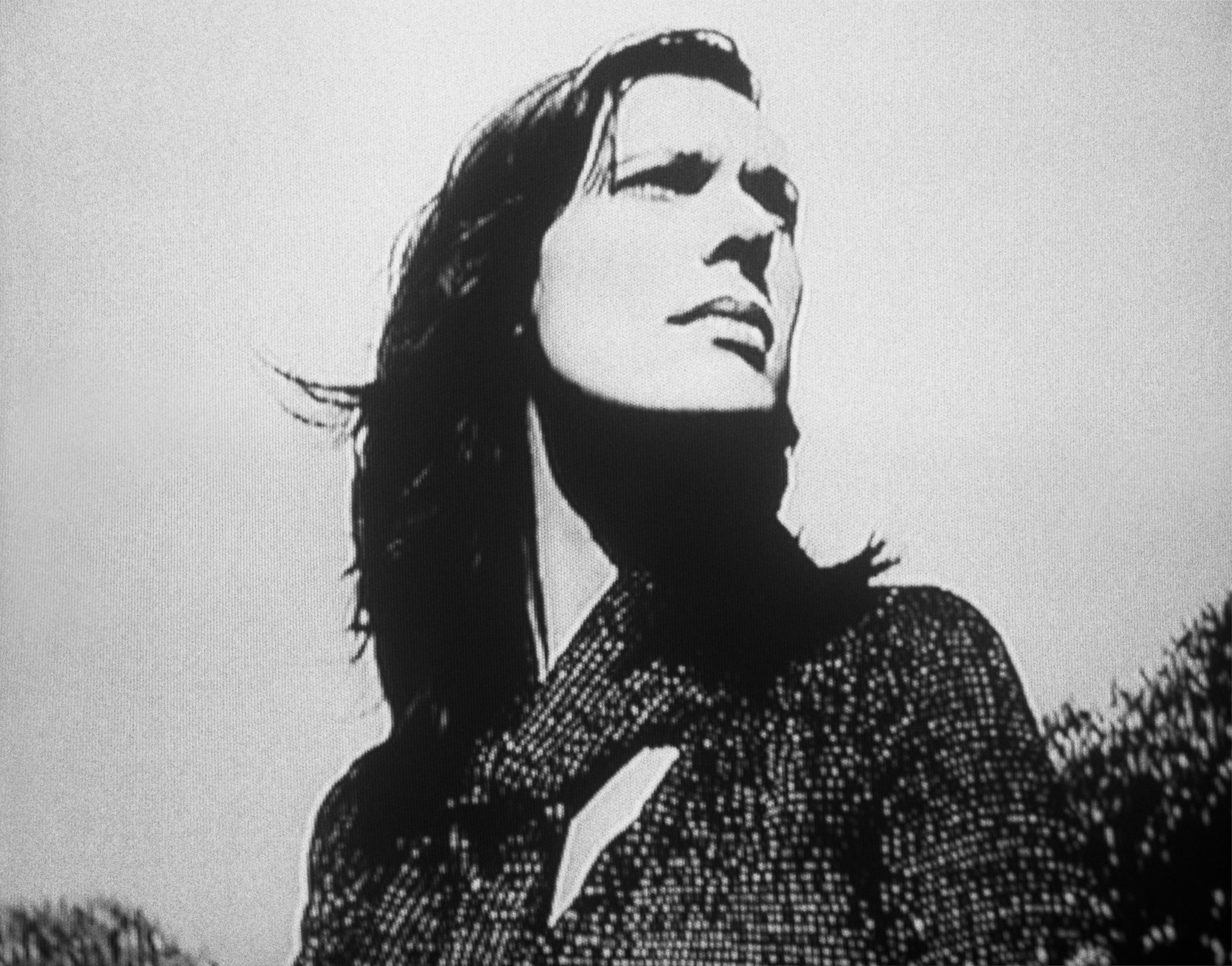
Laetitia Sadier is a singer, lyricist and co-founder, with Tim Gane, of Stereolab, the band they started in London in 1990. For decades, while Gane held the centre of the musical composition, she wrote the lyrics and sang songs in which pop, experimentation and politics learned to live together without asking permission. Stereolab announced a hiatus in 2009, returned to the stage ten years later and in 2025 released Instant Holograms on Metal Film, their first album of new material in fifteen years.
Laetitia Sadier has taken more than thirty years to learn two apparently incompatible things. The first is that, in order to create, you have to lose control. The second is that, if you are a woman surrounded by men, sometimes you have to fight precisely to win it. The contradiction isn’t theoretical. Sadier knows it well.
In 2019, in conversation with Victoria Legrand of Beach House, she recalled that for years Tim Gane had wanted to control practically every musical aspect of Stereolab. She was free to write the lyrics, but she also wanted to take part in the music, and she says she had to fight constantly just to be present at the mixes. That frustration would eventually push her to create Monade, a space where she could finally compose by herself.
In that same conversation she said something that seemed to conflict with that whole story: when you try to control everything, you become boring. For her, music begins to happen precisely when we stop forcing it.
We asked how the two things could coexist. The answer draws a distinction that will run through our whole conversation.
“When it comes to creativity it is better to respond to things and surrender to the flow of what is called forth. But when it comes to being a woman with men in a band then you have to fight to not be dismissed as a mere flower pot. Fight to be taken seriously as a musician, active agent of the band.”
Sadier makes no attempt to soften the line afterwards. She says too many men still consider themselves superior to women, and that women are still obliged to prove a worth that is usually taken for granted in men. And she ends with a question:
“Look at where patriarchy has lead us. Happy?”
Perhaps the problem was never exactly control. Perhaps it is something a good deal harder: learning what we should claim as ours and what we should let slip away.
A Co-creation
That is why what happened with Instant Holograms on Metal Film matters. Not only because it was Stereolab’s first new record since Not Music, from 2010. Also because the creative distribution was not quite the same as the one that had marked a good part of the band’s history.
On the new album, Sadier did horn and vocal arrangements, composed the entire final melodic line of “Vermona F Transistor” and took part in the mixing alongside Tim Gane and Cooper Crain, who handled the recording and engineering of the record. The official credits also present almost the whole repertoire as co-written by Sadier and Gane.
We asked her what the first musical idea that was truly hers had been, the one that managed to get into the record and survive the process. Sadier lists those contributions. And then immediately dismantles our question. She doesn’t see much point in separating who did what.
“It has more value as what it is, a co creation.”
The word matters precisely because it comes after that other story. For years she needed a place of her own in order to make music. Now she seems less interested in pointing out which territory belongs to whom. Not because authorship has stopped mattering. Perhaps because she first had to conquer it.
“It has more value as what it is, a co creation.”
Two, One
The story of Monade contains, besides, one of those accidents that seem designed in retrospect.
When Sadier needed a space of her own to compose outside Stereolab, she created Monade. Years later she noticed a coincidence that had escaped her until then: Stereolab pointed to stereo, to two; Monade, to the monad, to one.
It took her three years to notice the play on words. We asked which number it would be now.
“I'd like it to be a harmonious dance between two polarities that play as one.”
The answer helps us read Stereolab’s present, but also Sadier’s own biography. We tend to organise musicians’ careers the way you put dividers in a filing cabinet. Stereolab. Monade. Laetitia Sadier. The hiatus. The return.
She had said she saw all her work as a continuum, without defined sections. When we asked whether that continuum had ever broken, she introduces a small amendment:
“Let's call it a continuum with sections.”
It is probably a more honest description of a life than most autobiographies manage. Continuity without linearity. Persistence without stillness. The earlier versions of ourselves don’t disappear when a new stage begins. They hang around. Sometimes getting in the way. Sometimes helping.
Thirty Years on Top of a Song
This becomes especially visible when Stereolab play, today, songs that part of their audience has been listening to for three decades. The band was born in 1990. Some of those songs have spent three decades going in and out of people’s lives, but they haven’t aged in the same way as the people who listen to them.
The recording still takes up exactly the same minutes. The listener arrives different each time. We asked Sadier whether, when she sings an old song today, she and the people in front of the stage are really listening to the same thing.
“It's the same song with 30 years added on it.”
They are the same people too, she explains. Only thirty years older.
Then comes a line that holds a good part of this conversation:
“Same but with more wisdom and patina.”
Patina doesn’t exactly mean deterioration. Nor improvement. It is what time deposits on a surface precisely because that surface has been here. And Sadier adds something that stops the metaphor from closing too neatly: it remains, really, a mystery what each person hears when they listen to a song.
It’s hard to define. That is probably the interesting part. Because at some point a song stops belonging only to the person who wrote it. It can end up turned into the memory of a room its author was never in.
“Same but with more wisdom and patina.”
For someone, Stereolab may still be 1996. For Sadier it is the same song with three decades on top. Both things can be true at once. Two polarities working as one.
Rollerblades and Marriage
Monade has another hidden door. Its name comes from Cornelius Castoriadis, the Greek-French philosopher, economist and psychoanalyst whose work on autonomy, social creation and institutions has accompanied Sadier for years. In 2015 she described him as a very important thinker in her “life of ideas”.
Monade’s first album, Socialisme ou Barbarie, also shared its name with the political and intellectual group that Castoriadis had co-founded decades earlier.
It is right here that Sadier does something that should happen more often in an interview. She corrects us. We had described the monad as the psyche before it is shaped by society. That, she points out, sounds more like Jean-Jacques Rousseau. For Castoriadis, she explains, the monad is something indivisible, whole, impossible to fragment. A primordial idea. The correction is welcome.
But the important question came afterwards. Has she ever discovered that a desire she thought was her own really wasn’t?
Yes. Plenty. “Most of them!”
And she gives two extraordinarily mundane examples: wanting a pair of rollerblades. And getting married.
Suddenly Castoriadis ends up sharing a paragraph with a pair of rollerblades. It is probably the best place for him. Because ideology rarely presents itself knocking at our door with a folder under its arm. It often appears as desire. As aspiration. As something we feel to be intimately ours.
Sadier talks about patterns and traditions we borrow. And she adds that capitalism has a considerable skill for polarising, atomising and dividing. “Divide and rule!” We normally think of ideology as what someone believes. Perhaps its most sophisticated operation consists of becoming what someone wants.
There is no need to order a person to buy something if we manage to make them experience the purchase as an expression of themselves. Nor to force them to reproduce a structure if we manage to turn that structure into a personal aspiration. Buying rollerblades. Getting married. Being successful. Being productive. Being visible. Being yourself.
Even the contemporary obligation to “be yourself” comes, suspiciously often, with some fairly precise instructions.
The Inside Votes Too
None of this is a recent political discovery for Sadier.
Since the nineties, Sadier’s lyrics, with Stereolab and outside the band, have talked about capitalism, power, inequality and social organisation. What has changed over the years is part of the vocabulary. In her solo album Rooting for Love, released in 2024, words such as love, fear, consciousness, healing and inner transformation occupy a much more visible place, but they remain connected to political questions that go back a long way. And there a problem arises.
Love. Healing. Inner work.
They are expressions that have spent enough seasons in the hands of the wellness industry to justify a certain wariness. If the problem is structural, what happens when we move the solution onto the individual?
We asked her directly how she prevents inner work from becoming another way of leaving the world untouched. Sadier answers by talking about elections.
Political parties, she says, know perfectly well that a good part of the vote doesn’t come from a clean rational process. Fear, wounds, frustrations and unprocessed emotions can be mobilised politically.
For her, the rise of contemporary fascism shows how far that emotional material can be turned into a tool through austerity, propaganda, racism, sexism and incitement to violence. That is why she considers inner work important. Not as a substitute for politics. As one of the places where politics happens.
Healing wounds and traumas, she argues, can stop us repeating inherited toxic behaviours. A person who knows and accepts themselves would find it harder to sign up to narratives built around hatred and division. And then Lucio Battisti appears, the Italian singer-songwriter.
If one manages to know, accept and love oneself, even a little —“like Lucio Battisti suggested”— perhaps one can extend some of that affection towards others. The idea admits objections. A perfectly self-aware person can still hold appalling political opinions. And no amount of introspection replaces a housing policy, labour legislation or economic redistribution.
But Sadier’s question remains:
what do we do with the fact that politics also works inside us?
We don’t arrive at a ballot box turned into spreadsheets. We arrive with fear, resentment, a desire to belong, and memory. And someone is always willing to work with that material. The inside votes too.
Beyond Her Control
In April 2025, “Aerial Troubles” officially introduced Stereolab’s first new record in fifteen years. It was the first music from that new phase to reach the public accompanied by a video, directed by Laurent Askienazy. The images immediately prompted questions about the use of artificial intelligence.
Months later we put to Sadier a question that seemed to fit with something she had said years before: that artists are little more than inspired facilitators, that music passes through whoever makes it and, ultimately, doesn’t even entirely belong to us.
If an artist is a channel, we asked, can a machine also be part of that channel? Sadier begins her answer with a sentence we weren’t expecting.
“I apologize for this video.”
She doesn’t know the person who made it personally, she explains. It was Tim’s idea to contact that artist, and everything happened (the exclamation is hers) “beyond my control(!)”.
The phrase seems to have waited the whole article to appear. Control again. But now we know it doesn’t always mean the same thing. One thing is to renounce it voluntarily so that a creation can breathe. Another is to discover that something publicly associated with your work has been decided without you.
“I apologize for this video.”
Sadier says it was a lesson. At that moment, she admits, they weren’t fully aware of the implications of artificial intelligence. Now she believes that what is at stake is much more visible. Her criticism doesn’t begin with whether an image generated by a machine can be beautiful. It begins with money. With an industry sustained by financial markets and by a few companies competing to replace as many jobs as possible with technology.
She isn’t particularly diplomatic about those who own those tools. An artificial intelligence can be very clever, she says, but it has no heart. No soul. No conscience. And it is programmed by people who do have interests.
Even so, her answer is not an indiscriminate rejection. She recognises valuable applications in medicine, engineering and other fields. The question, then, stops being simply whether a machine can do something. It starts being why we want it to do it. And who gains power when it starts doing so.
Technological history is full of machines designed to save us work. Our moment adds a small perversion: we have begun to talk about saving work as if we also wanted to save ourselves the worker.
A Moment in Zamora
In 2012, during Stereolab’s hiatus, Sadier released Silencio, her second album under her own name. Part of that work had been born from an experience in a church in Zamora.
Real silence. Or rather, real enough to begin to discover all the sounds that are normally buried beneath noise. We asked whether she had found anything similar again.
Sometimes. She isn’t necessarily talking about churches. She talks about moments of stillness. When one appears, she tries to stay inside it as deeply as she can. It never lasts long. But for a few instants something strange happens: time stops. Sadier feels that a deep form of healing can take place there.
After talking about propaganda, borrowed desires, machines, markets and control, we end up in a few seconds during which apparently nothing happens. Perhaps it isn’t as minor a place as it seems. Our age has an extraordinary number of systems devoted to preventing precisely that. That nothing happens. That nobody looks out of a window. That a wait stays empty. That the mind doesn’t immediately receive something to do.
Silence has become almost an anomaly. Sadier tries to stay inside for as long as it lasts.
Perfection Is Boring
Before finishing we asked whether she still finds it easy to change her mind.
“I hope I can still change my mind.”
She adds that today it is very hard to be completely sure of almost anything. Then one last question remains. In an age when practically everything can be corrected, redone or regenerated indefinitely, do we have to deliberately protect imperfection? Sadier believes the technological capacity to make everything seem “perfect” may end up forcing us to reconsider what that word really means.
At best, she says, it might even get us to accept and protect our human condition better. And she ends with three words:
“Perfection is boring!”
It’s tempting to turn them into a slogan. They probably work better as a warning. Because a considerable part of our culture has spent decades trying to eliminate friction. Errors in a photograph. Deviations in a voice. Awkward silences. Waiting. Doubt. Ambiguity. Marks of time.
Now tools are starting to exist that can do it with an efficiency that until recently seemed impossible. Perhaps then we will discover which part of what we called a flaw held precisely the proof that someone had been there.
“Perfection is boring!”
During our conversation, Sadier defends apparently contradictory things. Authorship and surrender. Unity and polarity. Continuity and sections. Inner work and political transformation. Control and imperfection.
Perhaps they aren’t contradictions. We are made of things we choose and others that arrived before. Inherited ideas. Borrowed desires. Songs that other people turned into memories of their own. Wounds that didn’t begin with us. Technologies whose consequences we understand after having used them.
Nothing belongs to us completely. And yet there are moments when it is necessary to stand up and say: this, yes. This voice. This space. This decision. This is where I want to be.
Perhaps growing older consists less in definitively discovering who you are than in learning to tell the two things apart. What you must claim. And what you must let pass through you.
Thirty years later, Sadier is still the same. Only with more wisdom and patina. Luckily.
Three Records Before Leaving
Before we finish we do what we always do at Reasonable People: ask for three records.
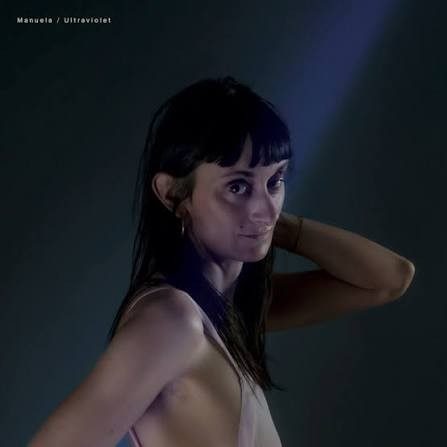
Laetitia Sadier chooses Ultraviolet, by Manuela; Play Me, by Kim Gordon; and Cut & Rewind, by Say She She.
After a conversation devoted in large part to finding out which things are ours and which stop belonging to us, we probably don’t need to ask those three records to prove anything.
It is enough to let them play.