Andrew Weatherall, Architect of Bad Taste
A DJ who remixed Primal Scream, changed his name several times and set himself a limit of 122 beats per minute. A friend who would have called it bad taste. A car from the nineties.
For years I had a friend I talked to a lot about music. He was older than me, and that difference in age had set up a hierarchy neither of us needed to discuss. Recommendations almost always traveled in one direction. He showed me records; I listened.
The Kinks. Black Sabbath. Mötley Crüe. To my friend, all of that was a kind of sacred territory you could wander away from now and then, but had better go back to.
His general advice was simple enough:
"Don't evolve."
It wasn't exactly a prohibition. It was more of a theory of history. At some point music had reached a kind of perfection, and much of what had come since was a matter of forgetting how things were done properly.
Drum machines, for instance, were kids' stuff. They had no soul. A machine couldn't get anything across. Nor did he seem very impressed by what was going on in England.
"England's going down the fucking toilet. The Madchester scene is made up of fucking drunks."
Acid house deserved an even shorter diagnosis:
"Drug addicts from some cheap neighborhood."
I laughed. But there was something I wasn't telling him: I had started flirting with the world of raves. At first I could hide behind curiosity. I was young, things were happening, and you had to go and see it. The problem was something else: I liked them. Not just the nights, the atmosphere, the feeling of walking into a place whose rules I didn't know yet. I liked the music. I liked what it got across in there. Those machines that supposedly had no soul seemed to acquire one the moment they started playing in front of hundreds of people. I didn't tell him.
The early nineties didn't look like the best time to obey an order to stand still, either. Every few months something showed up to complicate the map again. Grunge was setting rock on fire once more; guitars could turn into almost abstract masses of noise; rave culture proposed a different relationship between music, body and space; later would come other scenes and other labels, each trying to impose some order on what had just happened. The exciting thing wasn't knowing which music would survive. It was not yet knowing what the decade was going to sound like.
Los Planetas set off another argument. My friend had a fairly logical explanation for why you could barely hear the vocals under the guitars: they probably didn't have the money to record properly or to buy decent microphones. And on top of that, the singer sang badly.
For a long time I thought I didn't understand that music. Now I'm not so sure: maybe I understood it perfectly. Maybe what he heard as defects — a buried voice, a machine standing in for a drummer, repetition where he expected development, noise where he expected clarity — were precisely the signs that the rules he had learned to recognize good music by were no longer working for him.
One day I decided to turn our relationship around. We were in my car. Screamadelica was on. This time I was the one recommending the record. He looked at me, baffled.
"What bad taste."
I've gone back to that conversation in my head many times. Not because, thirty years later, I need to prove I was right. What I keep trying to understand is something a good deal harder: what was he listening to that made it seem so obviously bad, and what was I listening to that made it seem exactly the opposite? The argument had actually begun long before the two of us sat down in that car.
Primal Scream came out of a British indie culture that kept a strong connection to the classic rock canon. But at the end of the eighties the band began to move toward acid house, fascinated by something they couldn't quite name yet. Then came the parties, contact with that culture, and a musical transformation that would end up carrying an old Primal Scream song, "I'm Losing More Than I'll Ever Have," into the hands of a DJ called Andrew Weatherall.
At those parties it wasn't only the sound that changed. What you expected from a song changed. Nobody ever got to the chorus, because nobody was expecting one anymore. The body stopped listening to a story with a beginning and an end and started listening to a surface to move on for as long as it took — five minutes, twenty, however long the night lasted.
A drum machine could do exactly what my friend insisted a drum machine was incapable of doing: get something across.
Years later, on one of my trips to Madrid, I met another friend at the Maderfaker, one of those Malasaña places where funk and soul seemed to have a home of their own. I recently learned it had closed. There are small pieces of news that serve to measure time.
That day he told me I had to hear a song. My Bloody Valentine, "Soon (The Andrew Weatherall Mix)." That night we got them to play it for us in some joint or other. I don't remember exactly when I started noticing that name. But there it was, in parentheses.
Andrew Weatherall.
Guitars that had stopped behaving the way guitars were supposed to. A band from a world I recognized, shot through with the logic of another one I was only beginning to discover. And that name kept turning up.
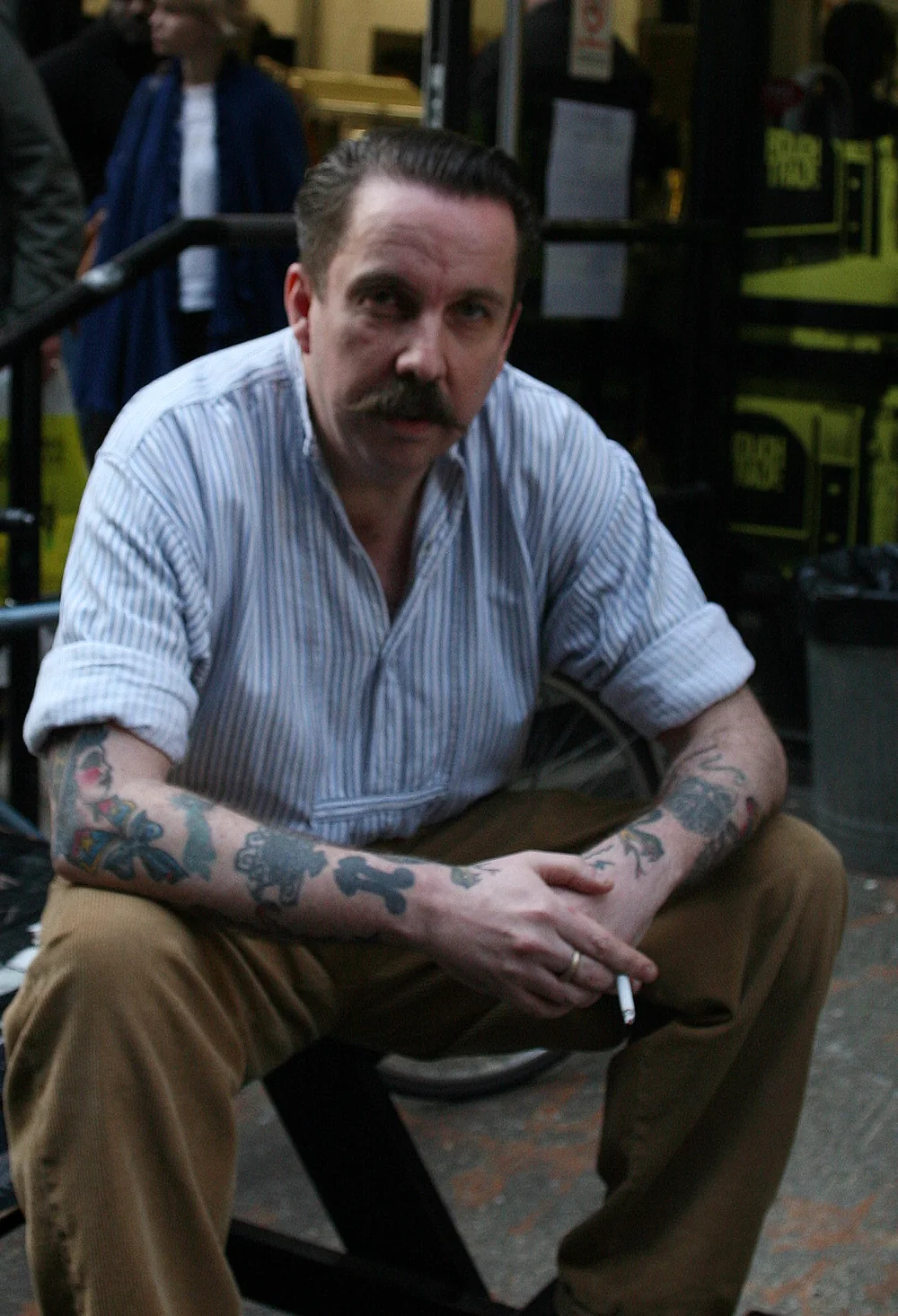
Weatherall had grown up absorbing music, but also clothes, books and film. His taste had been eclectic from very early on. He started DJing almost by default: at parties people asked him to bring his records.
Among his first remixes are precisely some of the names that were helping to scramble the borders that separated the two of us: Happy Mondays, My Bloody Valentine, Primal Scream, New Order. "Soon" and "Loaded" would end up as two foundational tracks of that strange zone of contamination between indie and the dance floor.
Suddenly, our argument in the car had a prehistory. "Loaded" had started out as something else: "I'm Losing More Than I'll Ever Have," a ballad of piano and brass with a Stonesy air, instantly recognizable to anyone who had grown up, like the two of us, revering sixties records. When the song reached Weatherall's hands to be remixed, he kept some of that material and grafted onto it something that had nothing to do with it.
In "Loaded" there is almost nothing left of the song as it was conceived. The kick drum moves in and never leaves. Bobby Gillespie's voice comes and goes as if floating above something that no longer quite belongs to him. And yet they are still there, surviving inside it, the piano and the bass line of the original ballad: remains of a shipwreck that someone has decided not to fully salvage. Two ways of understanding music, forced to share the same space.
My friend had heard an aberration; I had heard a possibility. To him it was bad taste. I wouldn't learn the name of its architect for a while yet. But what exactly is bad taste? We tend to talk about taste as if it were a possession. I like rock. I like electronic music. I like soul. We keep accumulating preferences until we've built a description of ourselves out of them. This is my music. This isn't. This is who I am.
Yet reconstruct our own musical education and that identity starts to look a lot less stable.
Someone lent us a record. An older brother played a tape. A magazine mentioned a band. A DJ slipped an unfamiliar song between two we did know. A friend took us to a rave. Another, in a bar in Malasaña, told us: Listen to this.
Taste has a biography. And that biography is full of accidents.
Long before his name appeared in parentheses after a My Bloody Valentine song, Andrew Weatherall had also heard about a new kind of music and decided it sounded terrible.
Terry Farley had been trying for some time to talk him into going to Shoom. He told him about Danny Rampling's club, about the strange music playing there, about football lads mixed in with people back from Ibiza. Weatherall didn't seem particularly impressed.
His reaction, in his own telling, was to think: "Fuck off, it sounds terrible."
He went the following week. He himself would tell, in 1991, what happened when he walked through the door: as soon as he went in he knew something special was happening there. The strobe lights and the smoke never let up all night and, by his account, he had to touch people to check he wasn't alone.
When I found that story I had to go back, in my head, to the car. All this time I had put my friend and Weatherall at opposite ends of an argument that, it turned out, the two of them had started in almost the same way.
After Shoom, that urge of his to share the records he found began to turn into something else. Weatherall had already started Boy's Own with Terry Farley and other friends. He was part of Bocca Juniors, who released two singles. He remixed "Hallelujah," by Happy Mondays, with Paul Oakenfold. And then, one after another, came Primal Scream, My Bloody Valentine, New Order: the name in parentheses was beginning to carry weight.
"I'd rather be a hidden-away backroom person that people have respect for. I'd rather be here for another 15 years than have a two-year big explosion."
As soon as a scene started claiming him as its own, he was gone: "whenever I get associated with a scene… I'm out of there, I'll go and do something else." He never had, in his own words, a career plan; careerism in art, and not only in music, struck him as "dangerous."
It's easy to read his name changes as part of that same flight — Sabres of Paradise, Two Lone Swordsmen, his own name, a succession of masks so as not to be pinned down. But Weatherall himself told it differently, much later, almost like someone confessing a misunderstanding:
"I always thought it was obvious that people who saw Sabres of Paradise or Two Lone Swordsmen knew it was me. As I found out 20 years too late the vast majority of people don't make that connection."
That changes the way we read his many names: it doesn't look as if he used them to hide. Weatherall saw a continuity between all those projects that others didn't always manage to recognize. And that raises a more interesting question: to what extent can we decide for ourselves what our identity is?
By then, Sabres of Paradise had already left behind records like "Smokebelch" and "Wilmot" and seemed to have become a stable project. Then it was over. Not even the people in the group have been able to fully explain why.
"I can't put my finger on anything. Still to this day I'm not quite sure what happened there."
Jagz Kooner remembers Weatherall bringing a very clear idea into the studio: don't look back. When the group ended, they never even sat down to talk about what had happened. Weatherall's death brought Kooner and Burns back into contact in 2020. Only later did they begin looking back at Sabres.
Over time, Kooner came to see something else in the end of Sabres: success had pushed Weatherall into the foreground, somewhere he didn't seem to want to be. The explanation fits his story so well that it's tempting to accept it. But it is a retrospective interpretation, not an explanation Weatherall left behind. Sometimes things break and nobody knows exactly why.
Out of that came Two Lone Swordsmen, the project Weatherall started with Keith Tenniswood in the mid-nineties. Their early records appeared on different labels within the Emissions orbit. After Sabres, Weatherall moved again: another name, another collaborator, another working framework. What didn't change was the movement.
Back then, remix parts often arrived on DAT. Some tracks would be marked: "Tracks 20 to 25 do not use." Weatherall would start precisely there.
"They're all the interesting mistakes, the little fuck-ups you can twist and put back in the track."
In 2004 came From the Double Gone Chapel: guitars, a conventional drum kit, song structures and, to the surprise of those who followed Two Lone Swordsmen, Weatherall himself singing. Seen from a distance, the scene looks perfect for our story: Weatherall changes again just when everyone thinks they know who he is. The anecdote, however, spoils a magnificent story. The reception was better than such a sharp turn might have suggested. At Pitchfork, Dan Lett gave it a 7.9: he acknowledged that the contrasting styles did not always sit comfortably, but concluded that Two Lone Swordsmen just about managed to make the transformation work.
None of this means Weatherall had no prejudices or was willing to accept any music at all. His curiosity lived alongside very firm standards. With disco, for example, he talked about "a sort of cheese line": if a track strayed too far over it and got a little cheesy, he was out.
Weatherall had borders too. Sometimes he even built them himself. In 2010 he launched A Love From Outer Space with Sean Johnston. The idea included a rule as simple as it was strict: the music must not exceed a hundred and twenty-two beats per minute.
The formula that soon became associated with the club was simple: "Never knowingly exceeding 122 bpm."
This time the rule pointed inward: it didn't decide what stayed out, but what could end up happening on the dance floor.
The limit wasn't a numerical whim. Weatherall and Johnston shared a taste for slower music.
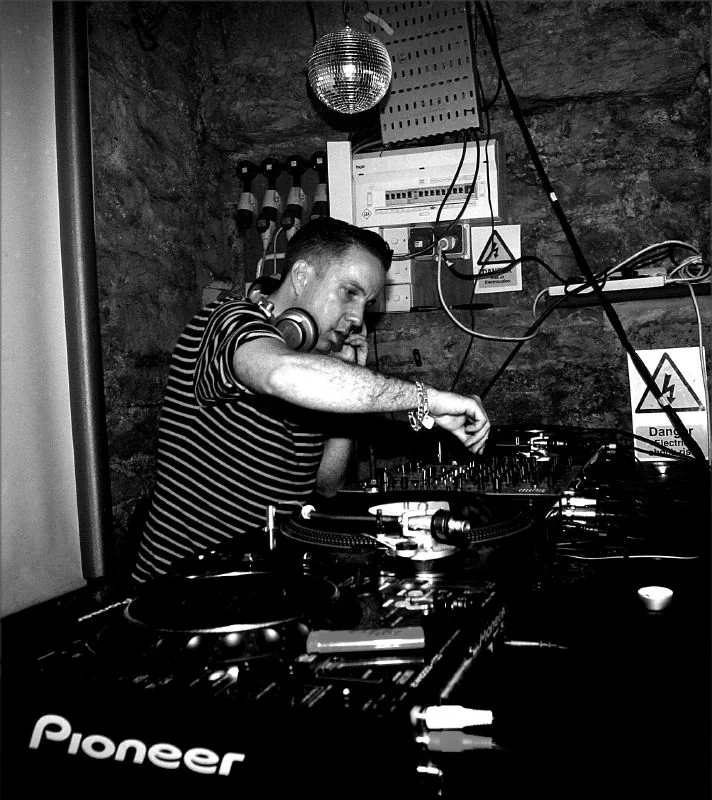
He died in mid-February 2020, at fifty-six. On January 30, two and a half weeks earlier, he had done, as he did every month, his radio show on NTS. Today there is an interface created by Weatherall fans for browsing an archive containing hundreds of hours of music and recordings. It is called DRVR. There, Weatherall can be explored by year and by type of material.
All those projects, sessions and names can be explored as parts of a single trajectory. Now there is an index.
My friend, on the other hand, vanished without leaving an index.
In time he fell in love with an American woman and walked out of my life. When he said goodbye to us he said he was moving to Memphis, Tennessee. Then came the rumors: that he had actually ended up in Arkansas, working in a gas station store. I never knew if it was true. Nor do I know what music he listens to now, whether he still thinks drum machines have no soul, or whether he ever ended up walking into one of those places that seemed so disreputable to him then.
For years I told the story of that car in a way that flattered me. He was the man who told me not to evolve. I was the one who was starting to go to raves, who listened to Screamadelica and was ready to find out what came next. Weatherall fit perfectly between us: the man who had spent his life crossing the borders my friend needed to put up.
It was a good story.
The trouble is, it wasn't entirely true either.
And of my friend I know even less. I know what he thought then. I don't know what happened afterwards.
Biographies have an advantage that life doesn't: when they're written backwards, everything seems to be heading somewhere. I can make a rave, a bar in Malasaña, a My Bloody Valentine song and that car ride lead all the way to Andrew Weatherall. I can even make my friend stand for one way of listening and Weatherall for another.
But then I remember Shoom.
Maybe that's why I keep going back to that car in my head. Not to decide who was right. Not even to find out which of us had better taste.
I'd like to go back and ask him one thing.
What he listened to afterwards.