A night at the Teatro La Latina: a theater full of people who have grown old alongside the same songs, and a 72-year-old musician who sits down at the piano and starts.
There is something slightly unsettling about walking into a theater full of people who have grown old alongside the same songs. Nobody needs to say it. It is there in the conversations before the lights go down, in that particular way of waiting for a concert when you no longer need to prove anything to anyone. The Teatro La Latina was full on Tuesday night. Truly full. And the average age of the audience left little doubt about where much of the anticipation came from: many of those present had discovered Joe Jackson back when you still had to get up off the couch to change a record.
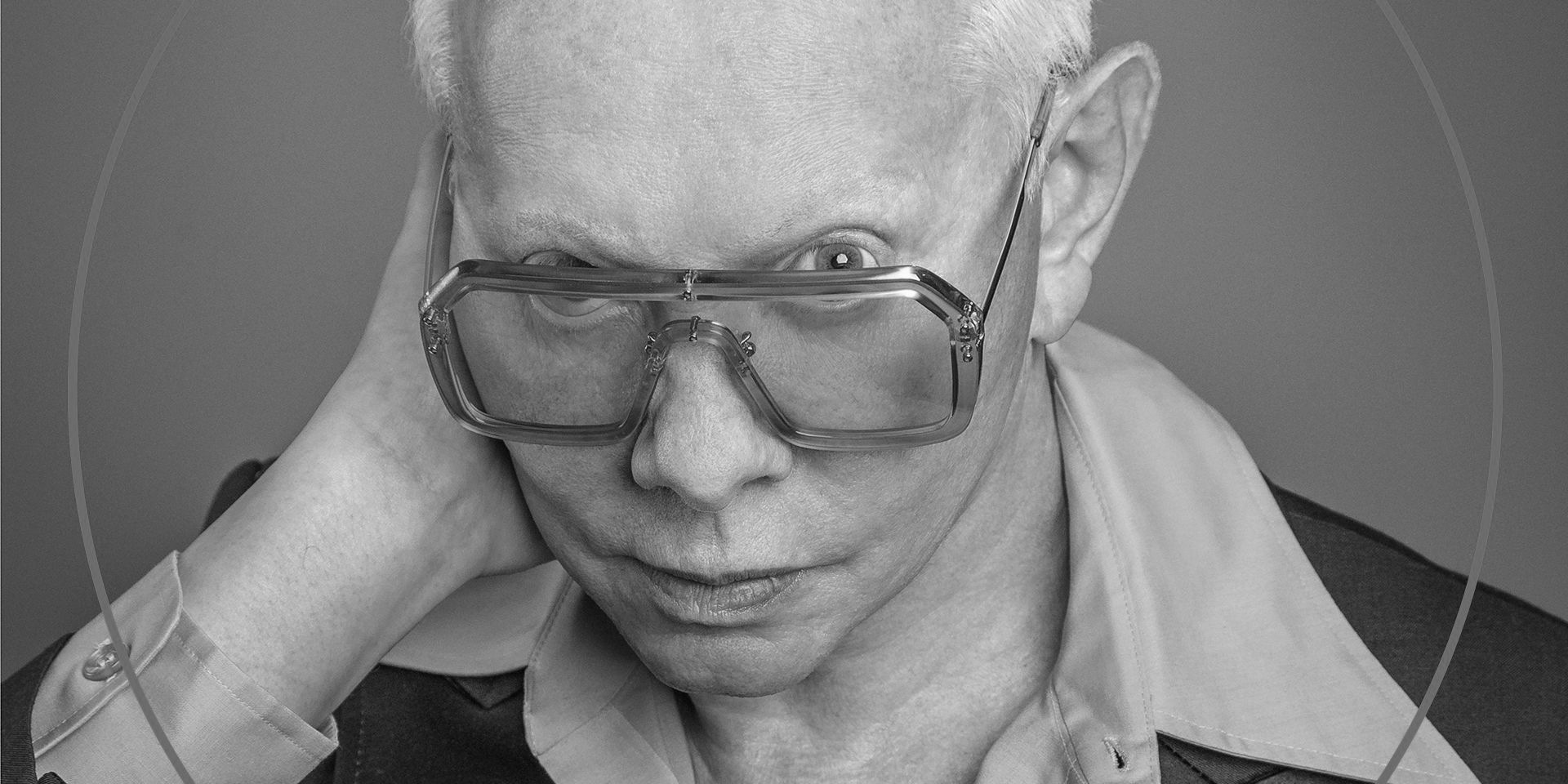
Then he appeared. Alone. Blue suit, shirt, no tie, the same lanky figure as ever, now carried by a man of 72. For a few seconds he did nothing. There was no need to. The ovation that greeted him was especially moving, perhaps because there is a difference between applauding a song you recognize and applauding a person who has come back. Jackson waved, sat down at the piano and began “Is She Really Going Out With Him?”.
It was a good way of explaining what was going to happen over the next two hours.
The song is almost fifty years old, but Jackson did not seem particularly interested in embalming it. Stripped of the sound it was locked into in 1979, reduced to one man, a piano and a melody that practically the whole theater could complete from memory, it worked differently. It wasn’t exactly nostalgia, though naturally there was some. It was stranger than that: finding out what is left of a song once almost everything that surrounded it when we first heard it is gone.
And a great deal was left.
During the first songs there were technical problems on stage. Jackson could not hear himself properly. From the orchestra seats it was barely noticeable and, had it not become known afterward, most of us probably wouldn’t have noticed. It is one of those incidents that measure a musician better than any solo: when something goes wrong and the audience never finds out. Jackson kept playing and singing, and the glitch never seemed to dent the precision of the concert.
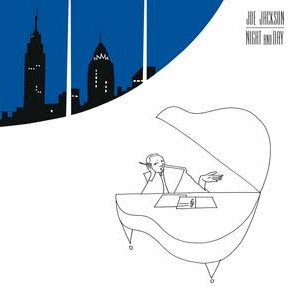
Then came Graham Maby. The bassist’s arrival for “It’s Different for Girls” had more to it than instrumental value. Maby has played with Jackson since the late seventies. He was there when all of that began and, almost five decades later, he was back at the center of the stage. Literally: for much of the night he was one of the concert’s most visible engines.
There are backing musicians, and there are people who end up becoming part of another musician’s grammar. Maby clearly belongs to the second group. His bass does not merely support Jackson’s songs: it pushes them, contradicts them, opens up spaces inside them. And watching him play now beside the man he recorded Look Sharp! with in 1978 produced a curious sensation. It didn’t feel like a reunion. Nobody was re-creating an old photograph. They seemed, quite simply, like two musicians who still had work to do.
Soon afterward Teddy Kumpel on guitar, Doug Yowell on drums and Felipe Fournier on percussion joined in. The gradual way the band was built was also a statement of intent. From the opening solitude of the piano we moved, little by little, to a group capable of enormous power without turning the songs into displays of muscle.
Because Joe Jackson remains, above all, an extraordinarily precise musician. And he still has a bewildering voice.
At 72 he still reaches high notes that make you check his date of birth in your head. None of that familiar negotiation between singer and repertoire is on show here, the kind that forces keys to be lowered, certain notes to be dodged, or the audience to be left to finish the most demanding choruses. The voice has aged, naturally, but it does not seem to have lost what made it recognizable. It still has tension, edge and that slightly impatient way of attacking certain phrases. At times it is hard to reconcile what you are seeing with what you are hearing.
There are backing musicians, and there are people who end up becoming part of another musician’s grammar.
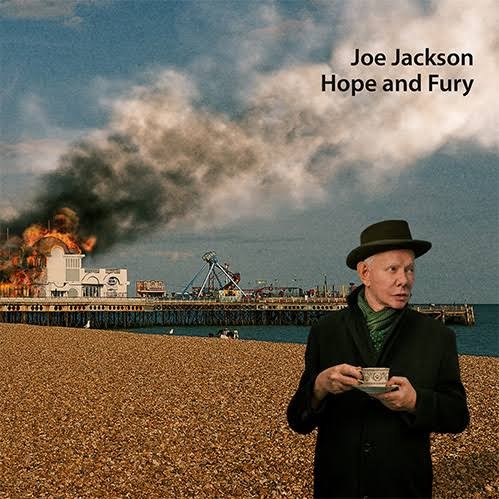
Jackson also seemed to be enjoying himself. This may seem a minor observation until you think of all the concerts by veteran artists where professionalism ends up looking unpleasantly like clocking in at work. Here the opposite happened. He was chatty, joking and visibly happy to be back in Spain. He even tried to promote Hope and Fury, his new record, with that mix of conviction and irony of someone who knows perfectly well that a good part of the room has come to hear songs he wrote forty years ago.
The eternal problem of the musician with a catalog: convincing hundreds of people that the song he finished a few months ago deserves to share a room with one that has been keeping them company since 1979.
The new ones, on the whole, stood up well to the test. “Welcome to Burning-By-Sea”, “I’m Not Sorry”, “After All This Time” and “End of the Pier” held their own alongside songs that hold an unbeatable competitive advantage: decades lodged in the audience’s memory. Some worked better than others, but none produced that drop in temperature so familiar from veteran concerts, that moment when the artist utters the dreaded words «this one is from our new record» and two hundred people take the chance to check their phones.
Jackson even introduced “End of the Pier” as his favorite. The contrast was interesting because Hope and Fury did not seem like a pretext for a new tour. The songs were woven into the set and defended by a band that drew no very visible border between 1979 and 2026.

Naturally, the classics came next. And there things changed. “Sunday Papers”, “Look Sharp!” or “It’s Different for Girls” immediately set off another current in the theater. Not necessarily because they were better performances, but because the audience had been doing its own work on them for decades. A song heard for forty years no longer belongs entirely to whoever wrote it. It has been in cars, bedrooms, break-ups, moves, weddings, absurd nights and eras that you probably remember better through the music than through any photograph.
Jackson seemed to understand that relationship perfectly without exploiting it. One of the most intense moments came with “Real Men”.
The song, released in 1982, retains a strange quality. Jackson wrote about masculinity, fear, desire, violence and identity when most of those conversations barely registered in pop. More than four decades later it is still uncomfortable and vulnerable. The performance ended up drawing one of the night’s biggest ovations.
It was not routine applause. For a few seconds there was that suspension that occurs very rarely at a concert, when musician and audience seem to realize at the same moment that something has just happened. Jackson received the ovation visibly moved.
There were also moments of unintentional humor. Introducing “Be My Number Two”, he announced a trip back to the nineties. The song comes from Body and Soul, released in 1984. By now he can perhaps be allowed some confusion: when you have been writing songs for almost half a century, the decades must start to look like the drawers of a dresser someone has organized badly.
A song heard for forty years no longer belongs entirely to whoever wrote it.
But that was precisely one of the keys to the night. The concert never had the solemnity of a retrospective. There were no screens showing photos from his youth, no grand explanations about anniversaries, no need to turn every song into a museum piece. Nor did Jackson seem to have much interest in playing the part of the survivor. He played. He introduced a song. He made a joke. He turned to the band. He carried on.
And the band responded. Kumpel, Yowell, Fournier and, especially, Maby claimed more and more room as the night went on, until the concert had become something very different from that solitary opening at the piano. There was muscle, but also elasticity. The songs could breathe. Some seemed to be built right there in front of the audience instead of simply reproducing their familiar versions.
Then came “Steppin’ Out”.
There are songs an artist can no longer play innocently. As soon as the first notes appear, they stop belonging to the repertoire and become an event. “Steppin’ Out” is one of them. The reaction was immediate.
Perhaps it was the moment when it became clearest how much the audience had brought with it to La Latina. The emotion spread through the theater before the song had even been fully recognized. Maby once again took the central place he had held throughout the night, and Jackson sang a song released in 1982 without treating it as a relic. More than one person struggled to hide how moved they were.
When it ended, the ovation was thunderous.
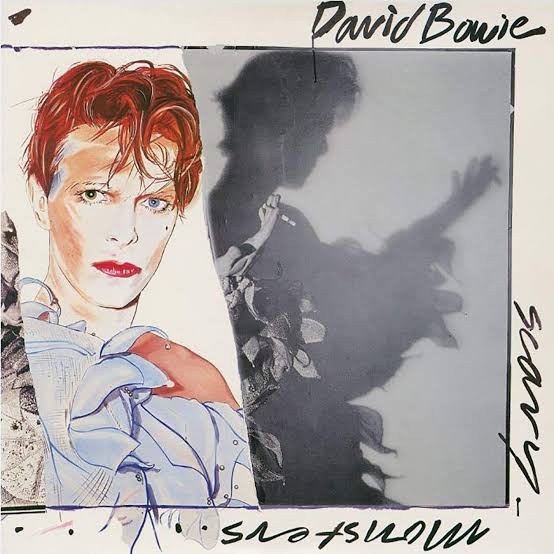
It could have ended there and it would have been a great concert. But the encores were still to come. And Jackson returned with a choice that said a good deal about him: David Bowie. “Scary Monsters (and Super Creeps)” did not come across as a reverential cover. It was one of the most powerful moments of the night. Jackson has always belonged to that strange category of musicians who are hard to confine to the decade that supposedly belongs to them. He emerged in the heat of new wave, but very soon began to slip away from it toward jazz, sophisticated pop, Latin rhythms, jump blues or classical composition. Bowie embodied, perhaps like no one else, that same suspicion that staying too long in one place was a way of starting to disappear.
The tribute therefore felt a little like one survivor recognizing another, even if one of them was no longer there.
Then came “You Can’t Get What You Want (Till You Know What You Want)”, bringing the theater back to movement and rhythmic pulse, before Jackson decided to come full circle. The band left. He was alone again. “Home Town”.
After all the power built up over the second half of the concert, ending once more with Joe Jackson at the piano was a perfect choice. The show had begun that way and had come back to the same point, but we were no longer quite in the same place.
Before saying goodbye he thanked the audience for continuing to support live music. It may sound like a standard pleasantry. That night it didn’t. There is something we lose every time a venue disappears, every time a tour stops being viable, every time listening to music becomes a little more of a solitary activity done in front of a screen. A concert remains one of the few cultural situations in which hundreds of strangers agree to spend two hours in the same place, paying attention to the same thing and with no way of skipping ahead, pausing or changing the song.
Joe Jackson has been doing this since a time when none of those options existed. Perhaps that is why his thanks carried some weight.
A concert remains one of the few cultural situations in which hundreds of strangers agree to spend two hours in the same place, paying attention to the same thing and with no way of skipping ahead, pausing or changing the song.
When the lights came up at the Teatro La Latina and the audience began to file out toward the Plaza de la Cebada, I didn’t feel I had attended a nostalgic ceremony. Naturally there was nostalgia. It would have been absurd to deny it in a room full of people listening to songs that in some cases had been with them for almost fifty years. But that was not the essential thing.
The essential thing had happened on stage. A man of 72 had just sung for two hours with an extraordinary voice, played the piano with formidable precision, introduced new songs, got the decade wrong, joked with the audience, paid tribute to Bowie and shared the stage with a bassist he has traveled alongside for a good part of his life.
Without making too much noise about any of it.
We walked out into the street with that rare feeling that the concert had been worth more than the price of a ticket. It had been a great night, yes, but also one of those performances you would recommend seeing at least once in your life, even to someone with no sentimental attachment to Joe Jackson’s records.
Because there are artists you go to see to find out how they were. And there are still a few worth going to see to find out how they are.
Joe Jackson is still one of them.