
The All Is Dream song Mercury Rev had gone longest without playing was «Lincoln's Eyes». It has come back into the set for the album's 25th-anniversary tour: twenty shows between 1 and 29 October, from Lisbon to Athens.
When I ask him what happened when he took it up again, Jonathan Donahue doesn't talk about technique or about having to relearn anything.
«We haven't played “Lincoln's Eyes” in maybe 20 years, perhaps, but it still sends chills up and down my spine when I hear it, when I sing it, when I play it.»
A song can stay almost perfectly still while the person who wrote it moves through two decades. The archive keeps the voice; the body that has to produce it again, no. To go back to a place, that place would have to still exist, and anniversary tours are usually built on the possibility of pretending it still does.
I speak to Donahue a few days before the tour begins. The conversation is with him alone, not with Grasshopper. He answers unhurriedly, letting the reply take a little while to arrive. At times he seems to discover what he thinks as he says it.
In 1998, a few colleagues at the office gave me Deserter's Songs. One of them had chosen the record and seemed to take personal responsibility for making sure I understood the magnitude of the matter. He handed it over with an almost disproportionate solemnity and a sentence I still remember: «This is the best thing anyone has made in a very long time».
Over the following days he kept coming back to it. He wanted to know whether I had listened to it yet, what I thought of the arrangements, the voices, certain details of the songs. It wasn't enough to have given me the record: he had to make sure it had arrived.
Twenty-eight years later, when Donahue talks about how unpredictable it is to play in front of other people, another way of thinking about that handing-over appears, without my having suggested it.
«You never know what to expect. In the same way you may have a candlelight dinner or go to a movie with a long-time partner or a best friend, you still never know what might come across the table, from the eyes or in a moment of conversation. And that's what is so rewarding about performing or being in any intimate relationship with someone, whether it's romantic or platonic, is that nervousness, that you're seeing something happen live in front of you, that this isn't a programmed algorithm coming across your computer screen.»
The New Mistakes
When I ask whether he remembers any specific decision taken during All Is Dream so as not to repeat Deserter's Songs, Donahue answers with Muhammad Ali.
«I think that's part of the responsibility of anyone in any relationship, whether it's with themselves and their own art and expression, or whether it's themselves and another person, personal relationships, is you don't want to repeat yourself. And at the same time, you have to be open to accept that the person you are today is hopefully not exactly the same person you were 25 years ago.»
He then recalls a line of Ali's: if you are the same person you were twenty years ago, you have wasted those twenty years. The boxer's documented quote was about seeing the world at fifty the same way as at twenty, but the version that appears here is the one Donahue keeps in his memory.
From it he draws a rule of his own: «making new mistakes, but not the same».
The rule has a history. Boces, released in 1993, belonged to a Mercury Rev that still seemed comfortable among noise, psychedelia and collision. See You on the Other Side, in 1995, did not work commercially. Then came the departure from the label, the exit of the manager and of the drummer Jimy Chambers, and the debts, before Deserter's Songs appeared in 1998.
Three years later came All Is Dream. In the UK it was released on 27 August 2001. In the United States, on 11 September.
Commercially, the later record ended up climbing higher than the one that had changed the band's fortunes: Deserter's Songs reached number 27 in the UK and All Is Dream number 11, still Mercury Rev's best position there. «The Dark Is Rising» also made the Top 20.
The critics received it well, though not without reservations. In NME, Roger Morton wrote that at times it made Deserter's Songs look like a dress rehearsal; Pitchfork noted that the orchestral turn was still there, but that the new songs were «far more personal than their last set». The Guardian and The Independent were cooler.
What You Hear Before the Songs
Discographies tidy up very neatly what, while it is happening, is rarely tidy.
Boces. See You on the Other Side. Deserter's Songs. All Is Dream. Born Horses.
Putting the titles one after another turns accidents, crises and provisional decisions into a trajectory.
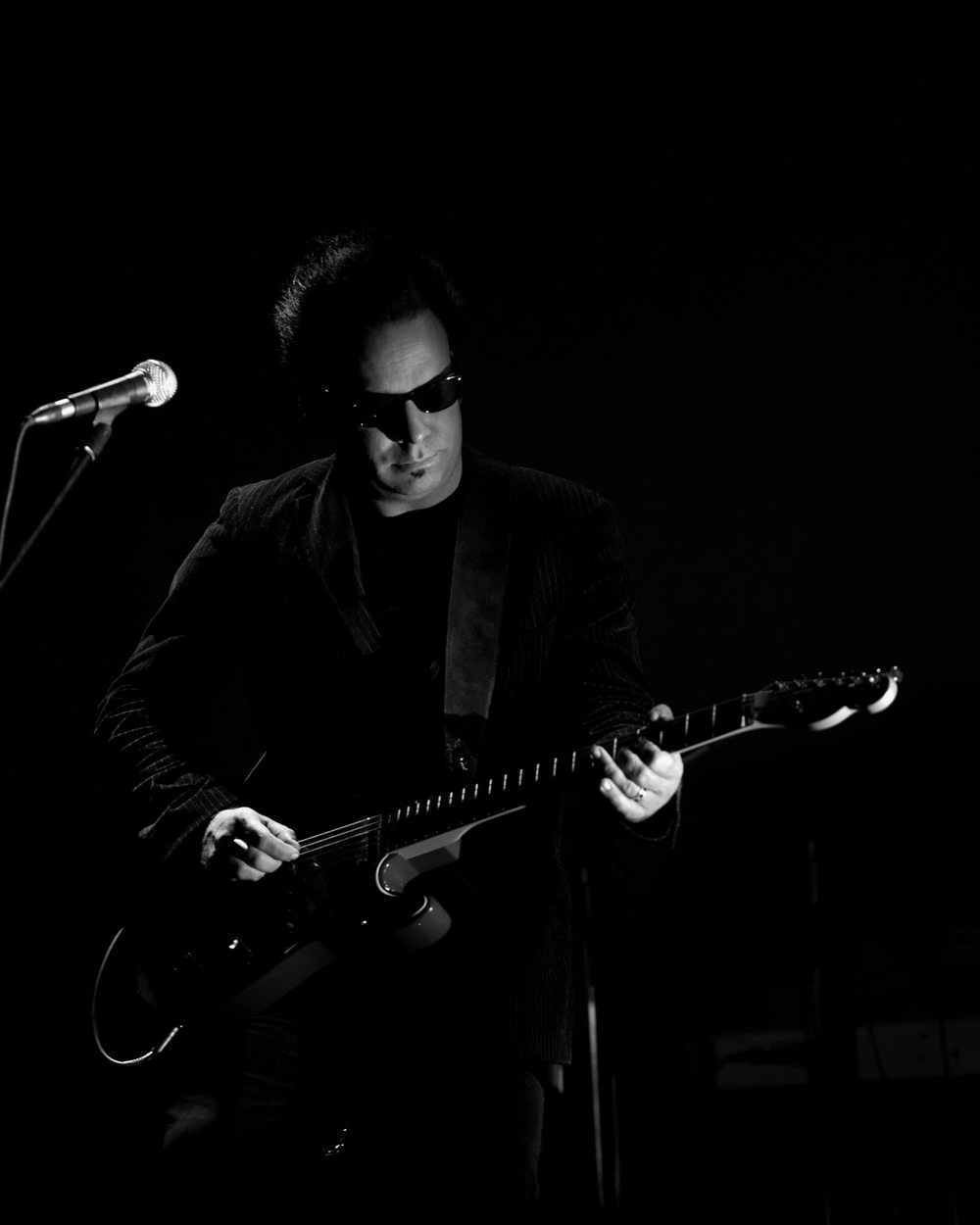
Donahue doesn't listen like that.
When I ask what he hears today when he puts on Boces, he replies:
«I hear the emotion of making those records. I don't always hear the songs themselves first, but I hear those deep impressions of the emotional sweat that went into those records and the emotional conversations we had as band members at that time.»
Then he sets even the instruments aside:
«Whether it's the early records or the one more recently, what often strikes you first off of the vinyl isn't the hi-hat or the kick drum. It's often the emotional flames that still flicker brightly or dimly depending on the memory.»
Archaeology
In the press release for this tour, Donahue has described All Is Dream as a musically «astral» record whose symbolism descends through layers of rock, earth and ash, as in an archaeological dig.
Something similar appears in our conversation when I ask him what he discovers on going back to old material.
«You do glimpse another way of doing or expressing or in some way envisioning yourself, not only as if it was a snapshot from 20 years ago and whatever you were wearing then or however much hair or the way that your haircut was styled 25 years ago, but you can also see some of the foundation that led you to where you are today.»
Those foundations don't belong only to Donahue and Grasshopper. The 2001 All Is Dream contains a constellation of people who are not on the stages of this tour: Dave Fridmann played bass and mellotron and took part in the production; Jeff Mercel played drums and piano and co-produced; Tony Visconti did the string arrangements and orchestration; Suzanne Thorpe played flute, Joel Eckhaus the musical saw, and Amy Helm contributed vocals. In 2026, Donahue and Grasshopper tour alongside Marion Genser, Jesse Chandler and Joe Magistro.
I ask him how you play now something that someone else invented.
«I think you want to capture the essence of whatever that performance was by yourself or any other person in the recording studio at the time, going into the future and even in the moment while it's being recorded. You have to be honest and understand that that won't be ever able to be repeated exactly, nor should it be.»
He then comes back to that word, essence:
«It's the essence of what makes it onto the vinyl that comes with the greatest responsibility. And that's why you want to choose those moments in the studio that you know have that essence, that foundation that can last through the years to come, whether it's musically or, in my case, also lyrically, those words, those phrasings, those moments that you know you'll stand by in the years to come.»
Donahue doesn't pretend that place still exists. He takes it for granted that it doesn't, and asks what deserves to cross to the other side.
The Hologram
I put to him directly one of the hypotheses that had taken me to the interview: from the outside, this tour looks like a conversation between Mercury Rev and its own past.
Donahue doesn't reject it, but he takes it somewhere else.
«I suppose it's having a conversation with our own selves, and in the same sense as I'm sort of a vehicle of expression for maybe who I felt I was 25 years ago, and expressing that through a new lens of me today.»
He then brings in the people on the other side of the stage.
«The people who are attending the concert, our listeners, they're not the same people they were 25 years ago. A quarter of a century has passed through their eyes and ears. And so for them as well, they'll be seeing a somewhat hologram of their own lives and where they were maybe when they heard All Is Dream for the very first time.»
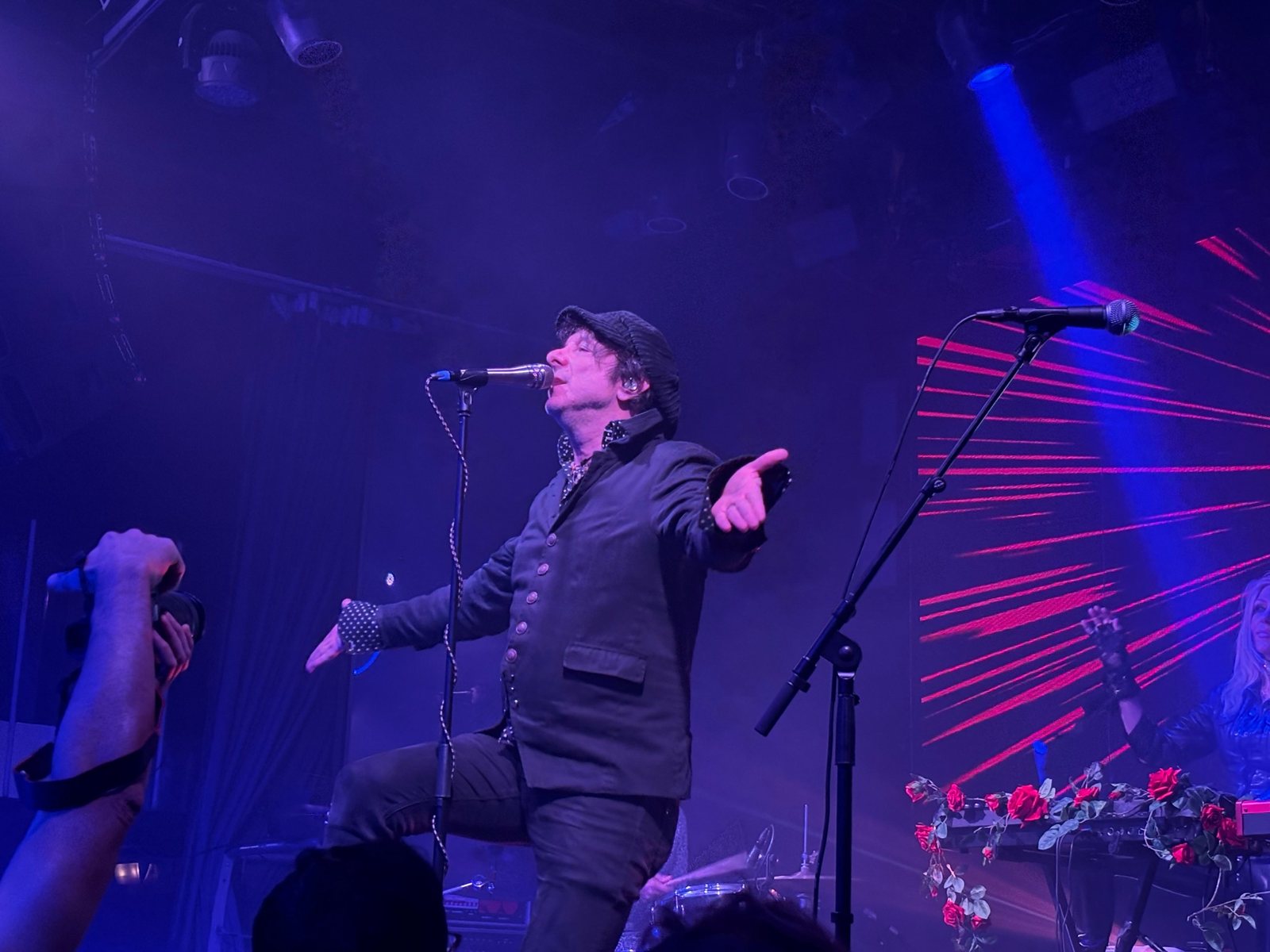
Someone who got to know the record in 2001 and someone who arrived at it last month from an automatic playlist can stand side by side during the same song. The songs are the same; the time from which they are heard is not.
Songs with a Will of Their Own
There is a question that Donahue also takes somewhere different from where I had expected. I ask whether he now needs to perform some songs differently because his voice, his hands or his body are no longer the same.
«I suppose it's because of me, not just my voice or my hands or Grasshopper's hands on the guitar. But it's the lens through which I see the work that we've done, and I feel the work. And also the songs themselves are their own beings in a way.»
He goes on:
«They have new feelings and generate new energy and excitement and enthusiasm on their own part. So I listen closely to the songs and what they want to say and how they want to say it. And that generally leads into a very good place.»
Attributing a will to a song could be an elegant way of dodging the question. With Born Horses it happened almost to the letter.
A New Mistake
While preparing Born Horses, Donahue would sit by the Hudson in the mornings with a cassette recorder and talk. He wasn't writing lyrics: he was recording ramblings, and with them the seagulls, the steamships and children playing in boats going by. He had already told the story of the file that ended up, by mistake, on top of a song back in 2024, during the promotion of the album. In our conversation he adds the exact moment when he heard it.
«All of a sudden I'm listening to the music of what might have been “Ancient Love” or “Mood Swings” and this other file, song file, accidentally plays on top. And it's my cassette tape from one of these Hudson River sessions.»
«I couldn't believe it at first. I turned around and I thought someone was talking behind my back because I had earphones on, and I realized it was me.»
The recording stayed.
«It sat so well, and the song just sort of reached up and swallowed it whole.»
After more than thirty years of trying not to repeat the same mistakes, one of Mercury Rev's new voices came out of the wrong file. A new mistake.
Athens
The tour ends on 29 October at Gazarte, in Athens.
I ask him what he will be doing the following week.
«We will end this tour in very late October in Athens, Greece, the home of democracy, which is very relevant to us as Americans right now, where our own country is full of turmoil and greed and turbulence and uncertainty and distrust.»
Donahue plans to stay there a few more days.
«And it will be a wonderful refresher as we spend a few extra days in Athens to be reminded of, quite literally in person, some of the early roots of democracy and how beautiful that can be… Especially these days, where in our own country this trust in our neighbor seems to have been eroded greatly.»
Three Records
At the end I ask him for three records he would put into Radio Muerte's hands right now. Donahue answers without submitting too much to the category.
He begins with Charlemagne Palestine, a composer associated with New York minimalism. He doesn't choose a specific album; he talks about piano and keyboards, about «otherworldly cascades» and about pulsations that, in his words, send his mind «into a quiet restful state, almost like taking a long walk in my own mind».
The second choice isn't even a musician. Hemi-Sync is an audio technology developed by Robert Monroe and marketed by the Monroe Institute, based on different tones sent to each ear to produce a binaural perception. Its more ambitious effects remain a matter of debate.
Donahue describes it as a way of temporarily leaving behind «the sort of material world drum kit, if you were to give it that idea of a metronomic sound in the reality of what we experience every day» and entering a state of stillness and suspended time.
His third choice is Pandit Pran Nath, a master of the Kirana tradition of North Indian classical music. Pran Nath arrived in New York in 1970 at the invitation of La Monte Young and Marian Zazeela; among his disciples were Terry Riley, Don Cherry, Jon Hassell and Charlemagne Palestine himself.
Two of the three recommendations belong to the same genealogy.
Donahue speaks of Pran Nath slowly:
«His expressions vocally lead the mind, as it were, which is always struggling to find meaning in the lyrics or attach itself to some beat. It leads it away from this and into this other open space, as it were, where the mind can't cling to what it normally desires.»