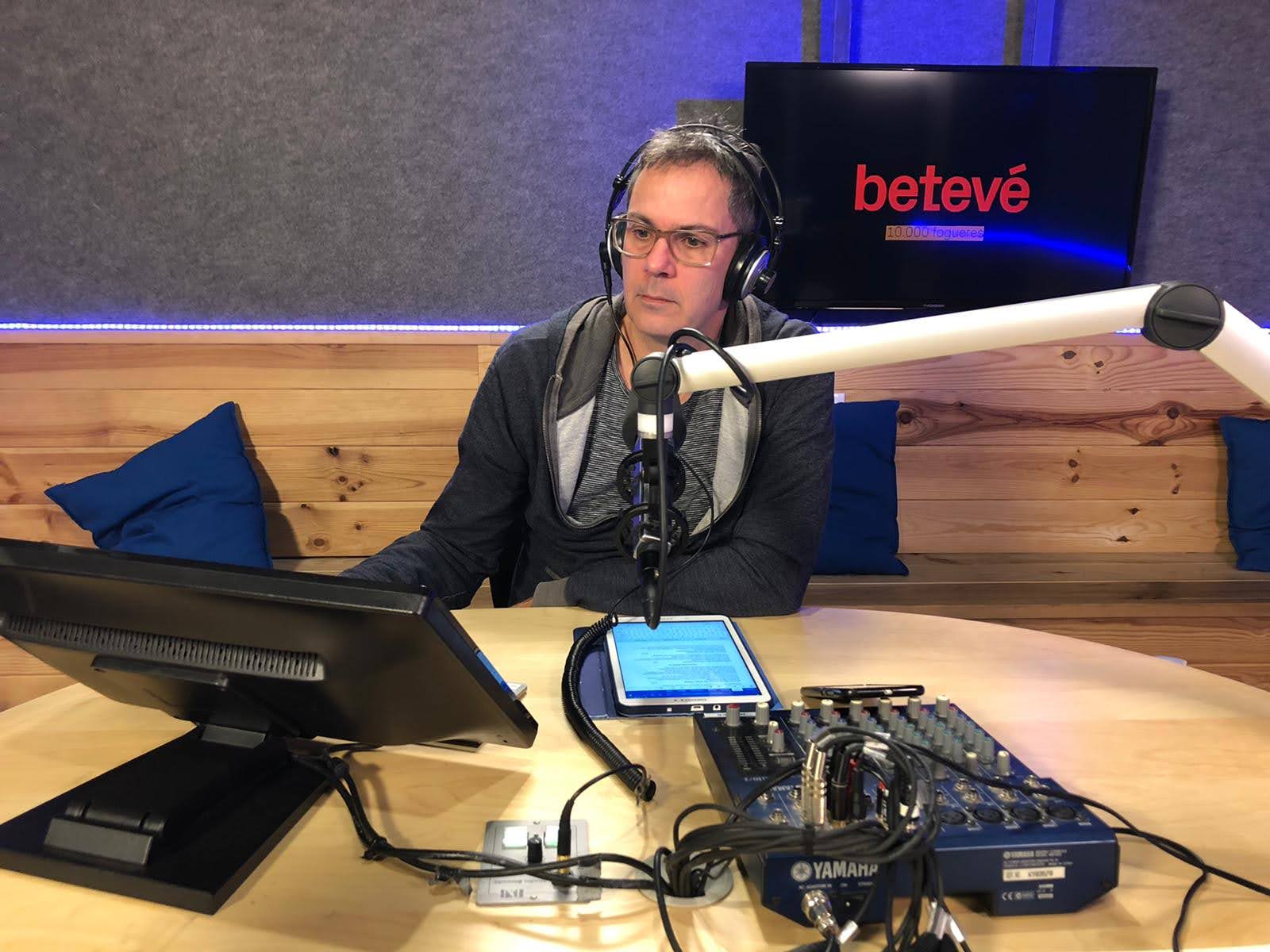
Nando Cruz has been writing about music for almost forty years. He wrote Pequeño circo, the oral history of Spanish indie, and today contributes to elDiario.es. Four decades should be enough to build what, in this trade, we call judgement: a private archive of comparisons, enthusiasms and things dismissed that lets you decide, almost automatically, what deserves your attention.
We asked him about the best decision of his career. He didn't mention a record he'd championed early, or a scene he'd spotted before anyone else. He mentioned a method: for years, in a weekly column he invented for himself, he started deciding what to write about in a way almost nobody else in the trade practises.
Better to let him tell it.
For six or seven years I had a column in El Periódico de Catalunya called «Otros Escenarios Posibles», where I put into practice some very unusual habits for music journalism. First, every week I went somewhere different: a place I'd never visited before. Second, and as a consequence, I began choosing the gigs I went to, and later wrote about, according to the venue rather than the artist. That was a radical change in the way I practised journalism, because it forced me to set aside my musical tastes, my likes and even my dislikes, and just let myself be carried along. Obviously, if I was going somewhere I'd never been, I tried to make it coincide with some interesting kind of performance. But again, what made something «interesting» was precisely the fact that it was unknown and surprising. In a way, I swapped my personal taste for another factor I consider especially important in this business of journalism: curiosity. So if I discovered a place I'd never been before, where an artist I'd never heard of was playing, in a genre that felt foreign to me, I already had three reasons to go. Why? Because all those conditions guaranteed an evening full of surprises. I'd have a lot to learn and a lot to explain in the piece. And that's the best thing that can happen to a journalist who's spent more than two decades going to the same places and seeing the same kind of gigs.
None of this means I've stopped going to gigs guided by my own taste and interests. But I don't usually write about those.
And I have to say that giving up taste as my main tool has been, for me, the best decision of my career as a music journalist. Taste — or what some people call judgement — is a prison, and an enemy of curiosity.
While we're at it, I'd add that this way of refocusing my work freed me from a second corset. If the first was my personal taste, the second was writing for music experts. Writing for readers who know a lot about music lets you use technical language and speak in a shorthand full of assumptions, but it also boxes you into constantly trying to prove that you're the one who knows most and deserves to be writing that piece. You want to prove it to the reader, to your colleagues at the publication, to your editor, to the competing outlets, to the rest of the trade… And that constant display of knowledge often turns the writing into a distorted mirror of who you want to be as a journalist, when really you should never appear reflected in that piece at all. Oh, and of course, you end up writing for an ever-shrinking pool of readers, because the ones who don't follow your technical language, or don't share your opinions, quietly drop away.
In those «Otros Escenarios Posibles» pieces I wanted to write for every kind of reader. Even readers not especially interested in music. I know that for a certain kind of journalist that counts as dropping down a division. For me it was the exact opposite. And I'll add that those were the happiest years of my career: I enjoyed myself like never before, learned more than ever, and rediscovered the pleasure of listening to music — an enthusiasm that had been starting to dry up.
Setting taste aside wasn't a decision made in a vacuum. Cruz began writing about music in the late eighties. He's four years younger than Fernando Alfaro, one of the musicians who, in Pequeño circo — his oral history of Spanish indie — recalls an era that's almost inconceivable today: imagining how a record sounded before you could hear it, with nothing but a review to go on.
Although I'm only four years younger than Alfaro, that age gap is a bit of an abyss in terms of how you accessed music in the eighties. By the time I started getting interested in music that was hard to find, radio stations already had access to those records and were playing them, so my first contact with some bands came through both the magazines and the specialist programmes on the dial, where I could already get an idea of what that music sounded like.
I do remember hearing individual songs on the radio and having to imagine what the rest of the record sounded like. And I couldn't settle that question until I had the record in my hands and listened to the whole thing, because nobody played a full album on the radio.
I remember that comment of Alfaro's and feeling a certain absurd, healthy envy at having had to imagine how certain records sounded purely from words. That must have been fascinating. An extraordinary mental exercise. And an added challenge for the journalist. As a journalist, I never felt that particular vertigo of having to describe something readers wouldn't get to hear for a while.
That gap, in any case, still existed.
The gap of weeks Alfaro was talking about had shrunk to a gap of days by the time I started working in music journalism. You'd read a review of a record and, if it convinced you, all you had to do was go to the shop for it. Some shops received the summary of album reviews days before the magazine reached the newsstand, and could place their orders in advance, so that by the time customers came in asking for those recommended records, they were already sitting in the crates.
With the arrival of the internet and the digitisation of music, a music lover can now read about a record and listen to it at the same time. And from the same device: the computer. The waiting time has dropped to zero. Not even a minute, because a music lover can listen to the record before reading a single review, write-up or comment about it.
That shift implies a lot of things. On one hand, descriptive criticism stops making sense, because that sonic information is already available. On the other, critics get drawn into a race to be the first to give their opinion, which has a negative effect on the literary and informative quality of reviews that are being written faster and faster, with less-digested opinions.
But more important than any of this — which, after all, concerns the journalism profession alone — is a change that also affects listening itself. The music lover goes from being a treasure hunter who enjoys every find to being a manager of mountains of sound files, an insatiable consumer of records who neither can nor wants to spend too much time getting deep into any single one.
The music industry encourages this idea that we have all music within reach and it would be absurd not to take advantage of the opportunity. For a while now we've been behaving like kids in a sweet shop where everything is free. Who wouldn't scoff the lot? That's affected not just how we listen, but even how music gets written.
A few years ago I read an interview where Patti Smith asked something like: what's more enriching, reading 50 books or reading one book 50 times? The glib answer is: it depends which book. But it's a very interesting question.
The trade changed too.
I think music criticism is disappearing from the traditional media. Not just from newspapers, but from specialist magazines that end up closing down. And the ones that survive, even if they still do music journalism, have had to dilute their critical eye so as not to lose advertising revenue.
But I still maintain that very good pieces are being written, analytical and well-researched, outside those outlets. Music journalism has become a kind of guerrilla war, where independence and depth are only guaranteed if you have total ownership of your own space — a Substack, a WordPress, an Instagram or Twitter profile.
I read pieces written by people in their twenties that are infinitely more sophisticated, incisive, deep and brave than the ones I read — or wrote — when I was in my twenties. There's much greater access to information for putting those pieces together, people are far better prepared than they used to be, and I also detect a sharper critical instinct. The problem is that, in parallel, the possibility of making a living writing about music has kept disappearing, and a lot of these people writing interesting articles will give it up in three or five years, because they'll need to find some way of paying the bills. And that living isn't provided any more by getting three articles a month published in an outlet that pays reasonably well. Like so many other creative jobs, we may be living through a genuinely interesting time in terms of the sheer volume of content being produced, but the worst possible time when it comes to earning a living from it. And that's always bread for today, hunger for tomorrow. A mirage that will last exactly as long as those journalists' vocation does.
We asked him whether the algorithm that recommends songs on Spotify, and the criteria used to book the big festivals, ultimately answered to the same logic.
They're interconnected, in the sense that some festivals are booked according to the streaming figures Spotify shows them. But from where I stand, big festivals and streaming platforms are also two sides of the same coin: in both cases, the music industry is chasing maximum profitability. On one hand, streaming has all of us listening to the same recorded music, but each in our own home, paying our own individual subscription — millions of individual subscriptions. On the other, when it comes to hearing music live, we get herded into enormous venues so that touring costs are cut to the minimum: one giant concert or one giant festival generates more profit than a 50-date tour.
And in both cases, the quality of listening has got worse. Streaming audio is dreadful, and the sound at these mega music events — don't get me started.
But that's where we are: consumers in the hands of huge corporations that have turned the music industry into a machine for generating profit at the expense of the pleasure of those of us who just want to listen to music, recorded or live.
From the industry back to listening. We asked him whether an algorithm had ever genuinely surprised him.
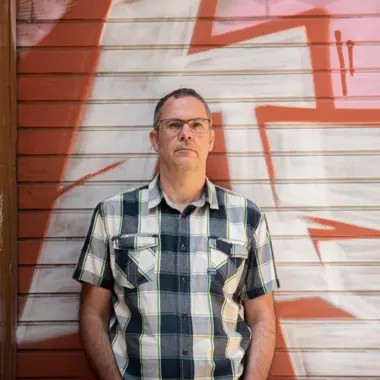
I keep the streaming platforms a little confused, because I only use them to look up songs. And mostly I'm looking up songs by artists of the most varied styles who happen to be passing through Barcelona — I do a radio programme about venues that put on shows outside the official circuit: local festivals, neighbourhood dives, squats, community centres… — and, of course, the algorithm has nothing to grab onto.
Andrés Perruca, drummer of El Niño Gusano, has a memorable line in his book Vida de un pollo blanquecino de piel fina. «Radio is, above all, for listening to people talk. Friends are what you have for discovering records». I think the same about streaming platforms and the media. On every one of those channels, recommendations are steered by interests. A friend's recommendation is far more reliable. I, at least, trust those a lot more.
That same method — going for the places before the names — is what let him watch whole scenes grow from the inside.
The scene I've watched grow closest up has been Spanish indie in the nineties. I saw Los Planetas in the Rockdelux demo-tape contest (which they didn't win), and since then I've watched them play Communist Party festivals in broad daylight and headline most of the country's festivals. I've also watched the 2000s Catalan independent scene grow, the one that cut its teeth at the Heliogàbal bar (legal capacity: 36 people) and has ended up filling large venues and theatres. I'm talking about Manel and Mishima, but also Joe Crepúsculo, The New Raemon, Mujeres…
Not every one of his dismissals, he admits, survived the passage of time.
Plenty. The most extreme case would be Juan Luis Guerra. Extreme not so much because I disliked him or didn't understand him, but because I never paid him any attention at all during his golden years. Back then, for all these reasons to do with taste and judgement, bachata sat at the exact opposite end of the spectrum from where I stood as a journalist focused on indie or Anglo-American guitar-based alternative music. Today he's one of my favourite artists. He has a superlative songbook, he's an extraordinary arranger, and his live shows are still a joy.
I have to say I love changing my mind. I deeply detest that attitude of «I already thought this 20 years ago; I was already saying it; I've never changed my mind or my coat». That business of unshakeable judgement is a brass medal. Have it put on your gravestone if you like. It doesn't interest me.
Your relationship with music evolves with age, just like your preferences in food, in how you dress… What's natural is to change, not to stay fixed. Having a static taste is typical of people who need to define themselves through their musical preferences. I got past that phase a while ago. I don't use music to define myself as a person. I use it to enjoy myself, to understand myself, and to be in the world. If I had to pick one style I'm passionate about today, I'd say Italian musica leggera. I like all of it: from the fifties right up to the most recent stuff. There you go.
Before finishing, we put one last scenario to him: imagine that, one day, the algorithm stops getting it wrong.
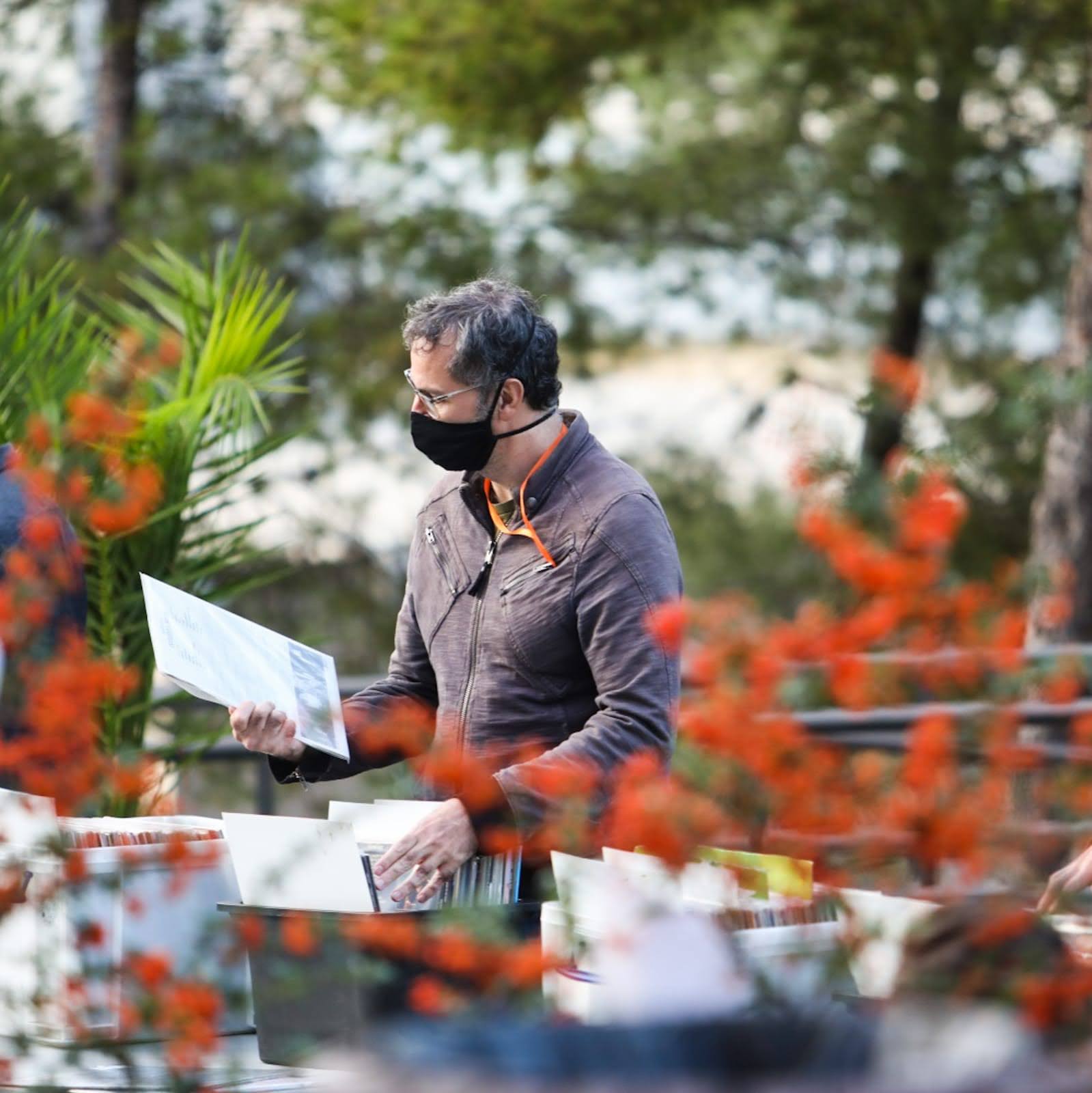
Spotify's recommendations are a mechanism for inducing consumption. Music journalism is, or should be, a conversation. What I look for in music journalism is a dialogue — between the journalist and the work — that in turn sets off another dialogue: between the reader and the work, or even between the reader and what the journalist has written. I look for, and find, in some music criticism, doors into works I don't fully understand. To me a music journalist is someone who takes me by the hand and brings me closer to something, walks with me for the first part of the journey, and then lets go so I can walk the rest of it at my own pace. A recommendation from a streaming platform is simply a signpost along the way, a nudge. Listen to this! For me that's not enough, and of course it isn't journalism. I'm not saying it isn't useful — but it's only useful for those who understand culture as an object of consumption, rather than as a way of communicating with each other, of relating to each other, of recognising each other, of understanding each other.