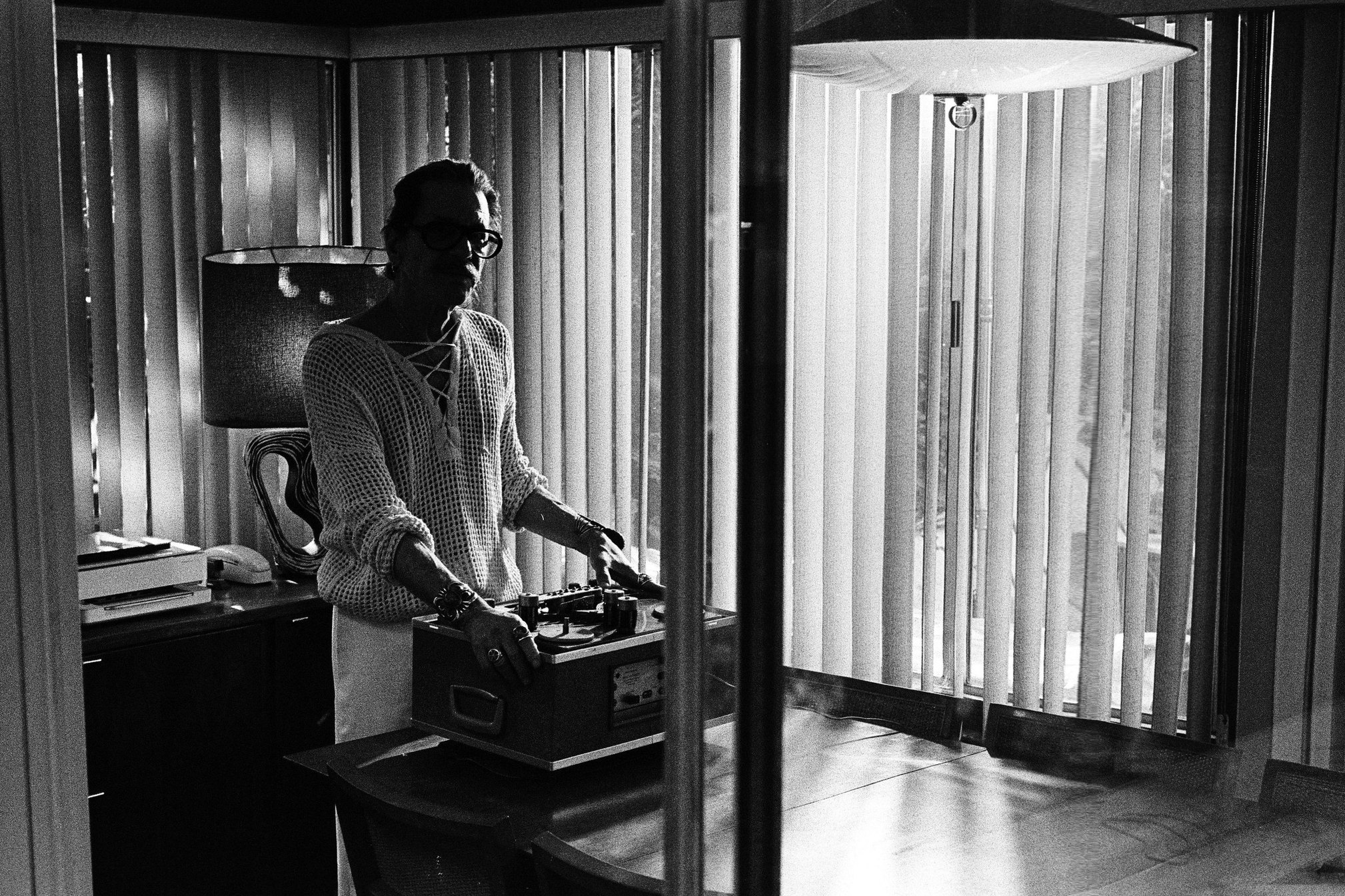
The only time I saw William Basinski was on 8 April 2016, in the courtyard of La Casa Encendida in Madrid. The Electrónica en Abril festival had programmed him before Not Waving, Alessio Natalizia's project, who had just released Animals.
Basinski was presenting A Shadow in Time in Spain. David Bowie had died three months earlier. By then, for almost everyone, he had spent fourteen years being the man of The Disintegration Loops: the tapes that began to disintegrate while he tried to digitize them, summer 2001, New York.
What I remember of that concert is less the sounds than a fairly specific physical sensation. At some point I stopped checking the clock on my phone and, when I looked again, the light in the courtyard was no longer the same. Basinski barely moved while the loops came back again and again without ever quite arriving at the same place. Then Not Waving came on and the courtyard changed speed.
Out on the Ronda de Valencia, my friend was still wired from Animals. He talked about the punch of Natalizia's beats and tapped out with his hand a kick drum that was no longer playing. I hardly joined in. I was still trying to understand how music that seemed so still had moved so much.
Ten years later, almost everything he releases still begins in his archive, on tapes that had been stored away for decades. Passing the Cup of Sorrows, his new record, began somewhere else. It was on the internet.
«Yes, the feed never seems to wear out but it sure does wear one out sometimes», he tells us. «The insufferable nonsense and misinformation and horror. It's too much. But sometimes the algorithm can feed one something revelatory.»
What it fed him was a man who studies past life regression therapy. He talked about people who, under hypnosis, recalled the interval between one life and the next: a meeting of spirit guides and something called passing the cup of sorrows.
That inspired the new piece. Usually, he explains, his titles come after the work is finished and he has had time to think about it. This time it went the other way round: he followed something that had resonated with him beforehand. The result is what he calls «a very broken, fragile and somewhat tearful piece».
We ask where the transformation happens in music that returns almost unchanged: in the sound, or in the person listening. «It just is… if one can relate to it one can hear it and resonate with it. It's a very human thing.»
At another point we assume that, when he records over old found tapes, he erases what was already on them. He corrects us. «I don't erase. My tape erase heads are covered with tape! You never know what you can find.»
In the late seventies, at the University of North Texas, he was already covering the erase head of a Walkman with tape so he could record one layer over another.
Since The Disintegration Loops made him known, people send him old reels: homemade playlists, almost never labeled. Basinski cuts a piece, records his own material on one side and then turns it over to see what is left on the other. On one of them, a soprano singing opera turned up.
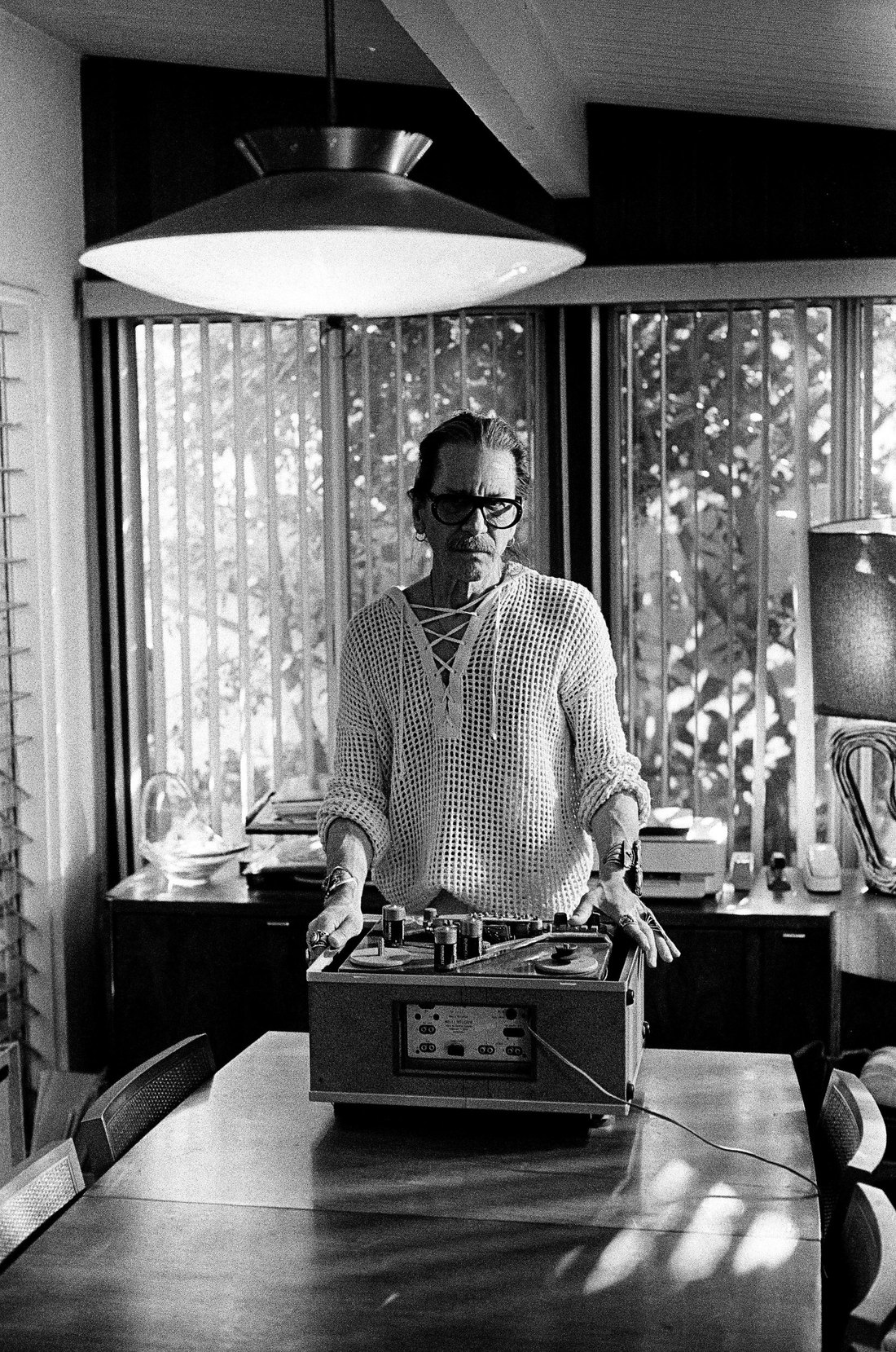
In 2012 he joked that he would have to throw a lot of things away before he died. Fourteen years later, we ask if he has. «Unfortunately no… we never throw anything away… Every closet and storage space is full of old cool shit some archivist is going to have to go through one of these days, if I can get my affairs and estate in order before it all goes in the trash.»
Last December, Sound on Sound asked him whether he had ever cleaned out the compartment of the Revox where the oxide from those tapes collected in the summer of 2001. It's still in there.
He has always worked with accidents. A Shadow in Time, the piece he presented that afternoon in Madrid, came from tapes chewed up by a big feral cat they used to have in Brooklyn. Basinski had kept them like that, broken. They were loops from the same period as The Disintegration Loops. He cut away the damaged parts and listened to what was left. With the first one, a fragment of strings, he knew straight away: «Yes, this is me. This is what Basinski sounds like.»
Another was a gnarly eighties saxophone that looped in a way that was «so kind of broken and beautiful» it reminded him of the B-side of "Heroes". Bowie had just died. Sometimes it takes years, he said that afternoon. Sometimes things happen magically, like this.
The cat story has aged as well. In other interviews the cat's owner and some of the details change. A tape wears a little every time it crosses a head. Memories have less visible methods.
When we ask where the line lies between letting time do the work and giving it a hand, he doesn't draw one. «I just do what I do… you never know what can happen if you let chance into the process… it's exciting and can be transformative.»
In the early eighties, some of his pieces came from the background music broadcast by a radio station at the top of the Empire State Building: strings designed for nobody to listen to. Basinski recorded them, slowed them down and found melancholy underneath.
Decades later, his own music occupies a similar place in other people's lives. People tell him they use it to sleep, to work, to concentrate. Even during childbirth. «It's a great blessing and it took years for people to find the work, so for me to receive these kinds of comments and accolades from fans… Who could ask for more?»
New York keeps turning up in those recordings too. He arrived in April 1980, in the middle of a transit strike, and found a huge loft in downtown Brooklyn with a view of the Twin Towers. Years later, the city condemned the whole neighborhood. In 1989 he moved with James Elaine into an old ironworks in Williamsburg and called it Arcadia: home, studio and concert space. He left in 2008, when renewing the lease meant ten thousand dollars a month. By then, the CBGB where he had played was a clothing store.
But the city stayed inside the tapes as physical noise: radio signals leaking into wires, interference, rooms and machines that no longer exist.
What does he hear now when he goes back to them? «It's still here! Resonating throughout time and space.»
Some of those recordings waited decades to be released. For Nocturnes, which came out in 2013, Basinski used digital tools to fix details of a 1979 tape that had bothered him for years.
Who has the last word when he goes back today to a tape from forty years ago: the one who recorded it, or the one who finds it? «The same man… me. We have newer tools now. All is allowed in the process. I have a long process as you know. 40 years? Approaching 50? Good heavens… how old am I???»
Passing the Cup of Sorrows opens another kind of question. The practice he found in that video is about understanding and forgiving someone who hurt us in another life. We ask whether music can do some of that work. «Yes I know it can. I've performed it live twice now in Japan and Poznan, Poland and will be performing the piece again next year. The response has been sublime.»
He doesn't explain much more.
That April afternoon in 2016, after talking about Bowie and the elegy, Basinski changed register. He had a surprise side project with Preston Wendel, his young engineer in Los Angeles, a beat maker who had gotten him playing the saxophone again. It was called Sparkle Division. Loungey, jazzy, summer. «It's just like love each other, dance, have sex, whatever», he said. «It's not about death or anything like that most people associate me with. So it's the other side.»
He recalled playing in jazz bands, avant-garde jazz bands, punk bands: in everything. He said that the way his distribution worked, it took forever to get a record out, but they hoped to have the album out by the end of the year. It would be called To Feel Embraced.
To Feel Embraced came out in 2020.
Now we ask how much room the public image of William Basinski — the tapes falling apart, the melancholy, the disappearance — leaves for everything else. «There are many sides of me and I'm still just me. Deal with it!»
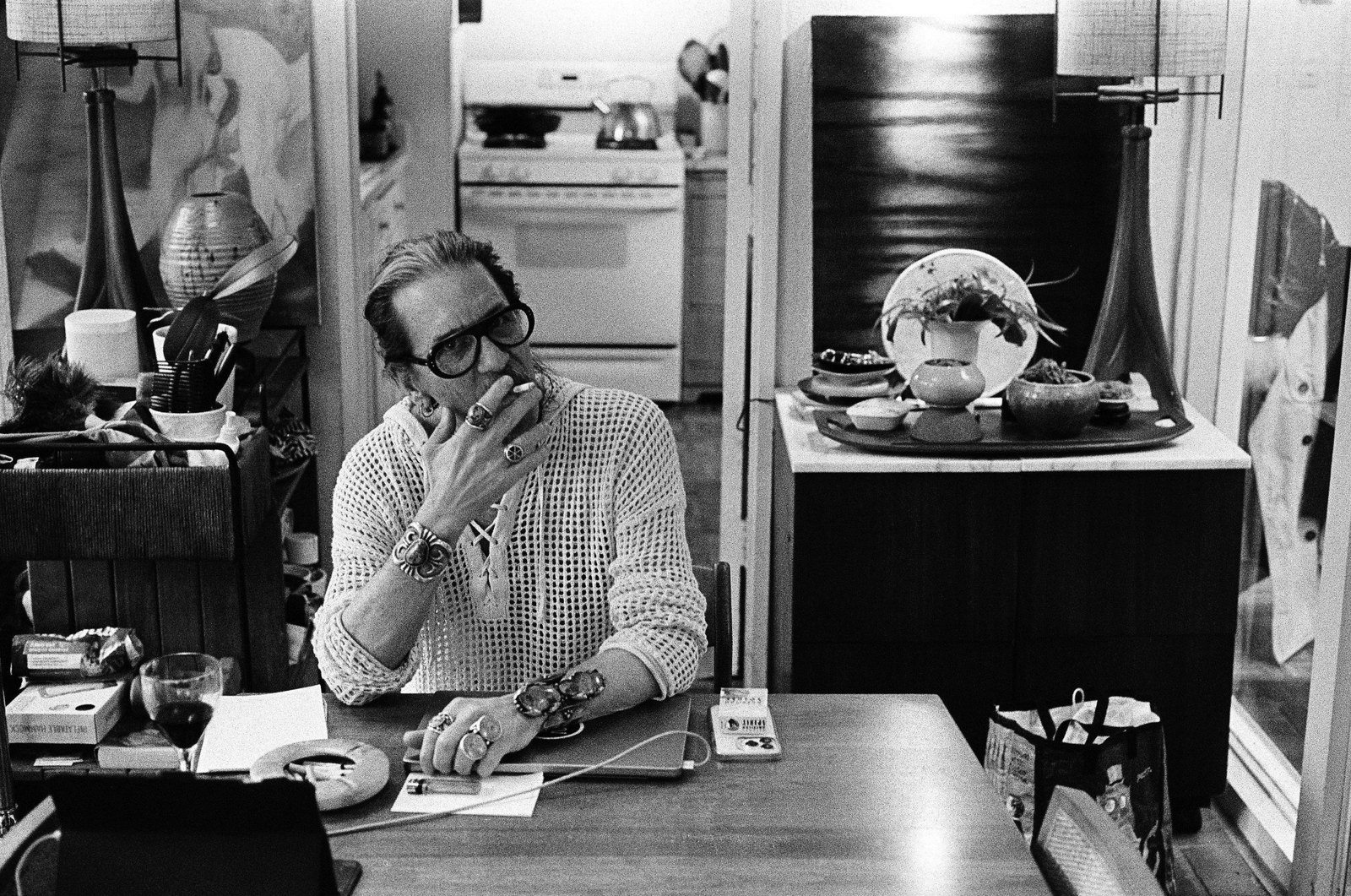
Radio Muerte's last question is always the same. We don't ask for the best records, just three that have mattered in someone's life.
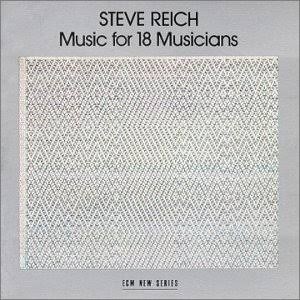
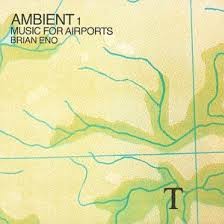
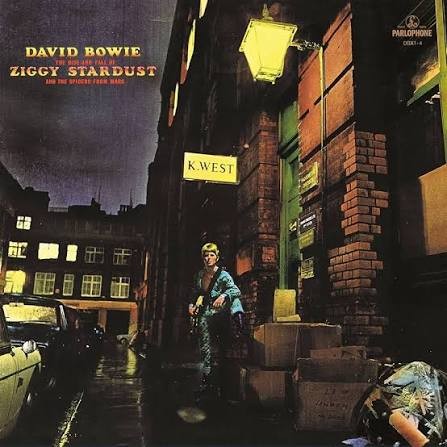
«I always say this but I would say Steve Reich, Music for 18 Musicians; Brian Eno, Music for Airports; and of course David Bowie, Ziggy Stardust & the Spiders from Mars, along with just about everything else he did.»
And he ends: «My hero.»